Tides of Knowing: Reader's Field Guide
Reading the Grip
When a seeker is holding tight to outcomes: a framework for the session
When a seeker assigns life-or-death importance to a specific outcome, they create the very contraction that makes the reading hardest to land. The grip is not the situation. The grip is the obstacle.
Step one: Recognise the signal before the session begins
In the seeker's initial contact
Language tumbling over itself. Urgency. Words like "ultimate," "destroyed," "everything." The weight of a situation that has become life-or-death in their framing. You'll sense it before you've analysed it.
In the session with the seeker
They're auditing the cards for confirmation rather than receiving them. Questions that circle the same outcome. Resistance to anything that doesn't match the feared or hoped-for result.
Step two: Orient yourself before you begin
Pull a few cards for yourself: not the seeker
Not to preview their outcome. To know what you're working with so you can make deliberate choices about how to sequence and frame the reading. The chef surveys the kitchen before the menu arrives.
Ask the single most useful question
Is this person currently able to receive what the cards are showing? If not: what do they need first? That answer shapes everything that follows.
Use the technology if you have it
Recording a reading gives you space that live sessions don't. You can pause, reflect, restructure. Use that time deliberately. You're not obligated to deliver in a single unbroken stream.
Step three: Language that loosens the grip
What if the situation is moving somewhere you haven't considered yet?
The cards aren't showing the outcome you're bracing for. They're showing something forming behind it. Can we look at that together?
What would it feel like to hold this more lightly: not give up on it, just carry it differently?
The grip itself is information. What does it tell you about what you most need to trust right now?
The distinction that matters: delivery is not performance
Performance looks like
- Filling the time because the time is there
- Pulling more cards to demonstrate depth
- Covering everything so you feel adequate
- Delivering for the impression it creates
Delivery looks like
- Thinking about how to hand it over usefully
- Creating conditions for the reading to land
- Giving the seeker something they can use
- Knowing when sitting with someone is enough
What a well-anchored reading leaves behind
An orientation, not just information
They understand not just what the cards showed, but why they found it hard to receive. The grip itself becomes part of what they learn from.
A tool they can return to
Something they can use in the weeks ahead: a way of understanding their own relationship to the outcome that gives them somewhere to stand when the ground shifts again.
The reading in practice
What follows is the actual reading I conducted for the seeker explored throughout this series. From the first message, it was clear there was significant emotional weight attached to the situation and that the reading would need more than intuition alone. It needed structure, pacing, and enough clarity to stop the session from collapsing into urgency or reassurance-seeking.
What I want to show you here is not simply the cards that appeared, but the process I used once the grip became obvious. The spread, card placement, and pre-read orientation were all chosen deliberately in response to the circumstances surrounding this particular seeker and what I already understood would need careful attention inside the session.
You may approach the cards differently yourself. You may use a completely different spread. That is not the point of this guide. The purpose here is to let you observe how an experienced reader structures a reading when the emotional conditions around the seeker are already shaping the field before the first card is fully turned.
The interpretation itself is not included. Instead, I invite you to sit with the same structure, notice what your own practice perceives, and observe how the reading changes when the grip itself becomes part of what is being read.
Pre-read orientation: before the session
These cards were pulled before the session began. They were never intended to be shown to the seeker directly. Their purpose was to orient me to the conditions around the reading, test the initial signal I was already sensing from the first contact, and create enough interpretive structure for the session to remain steady, useful, and clear.
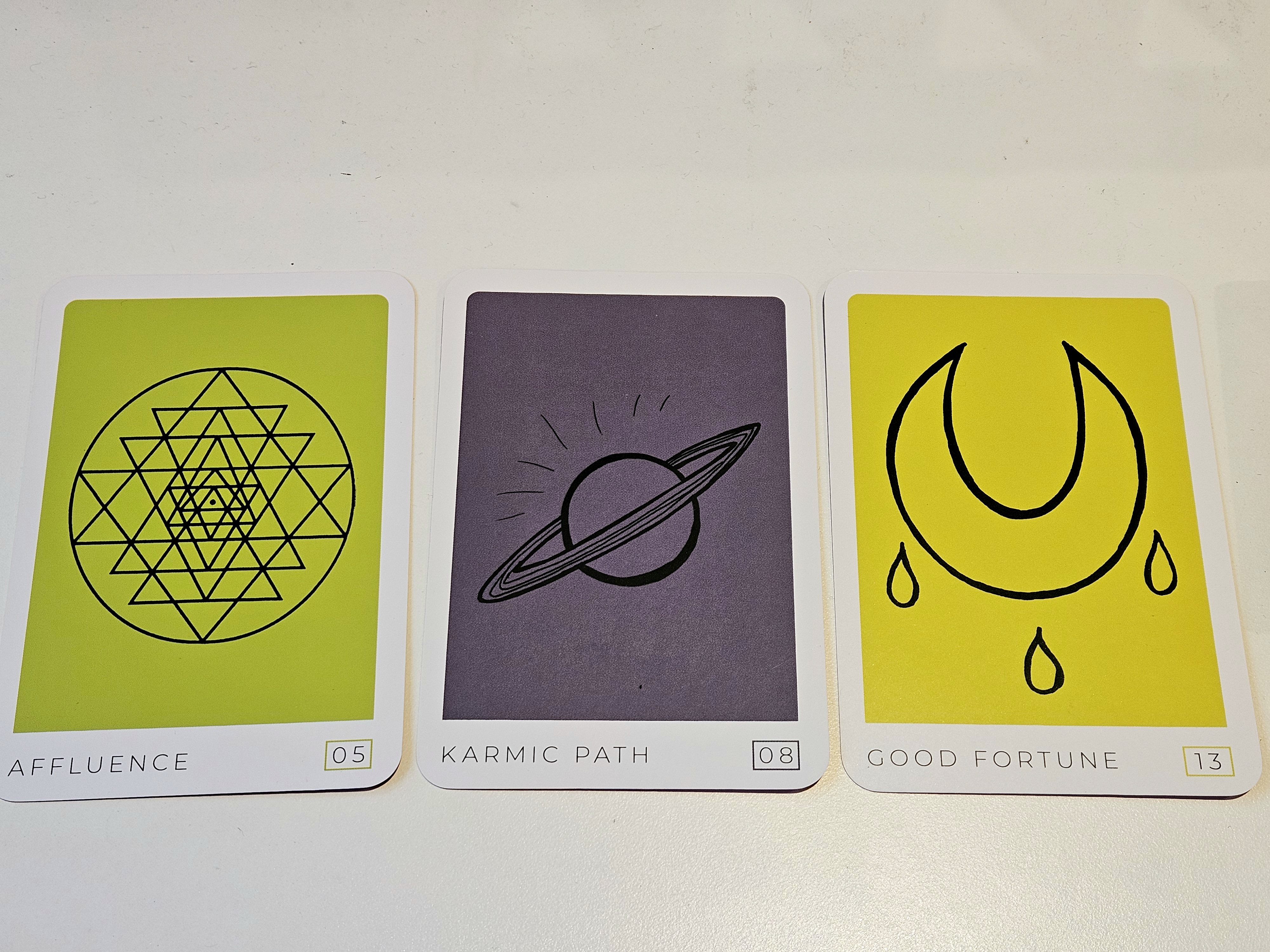
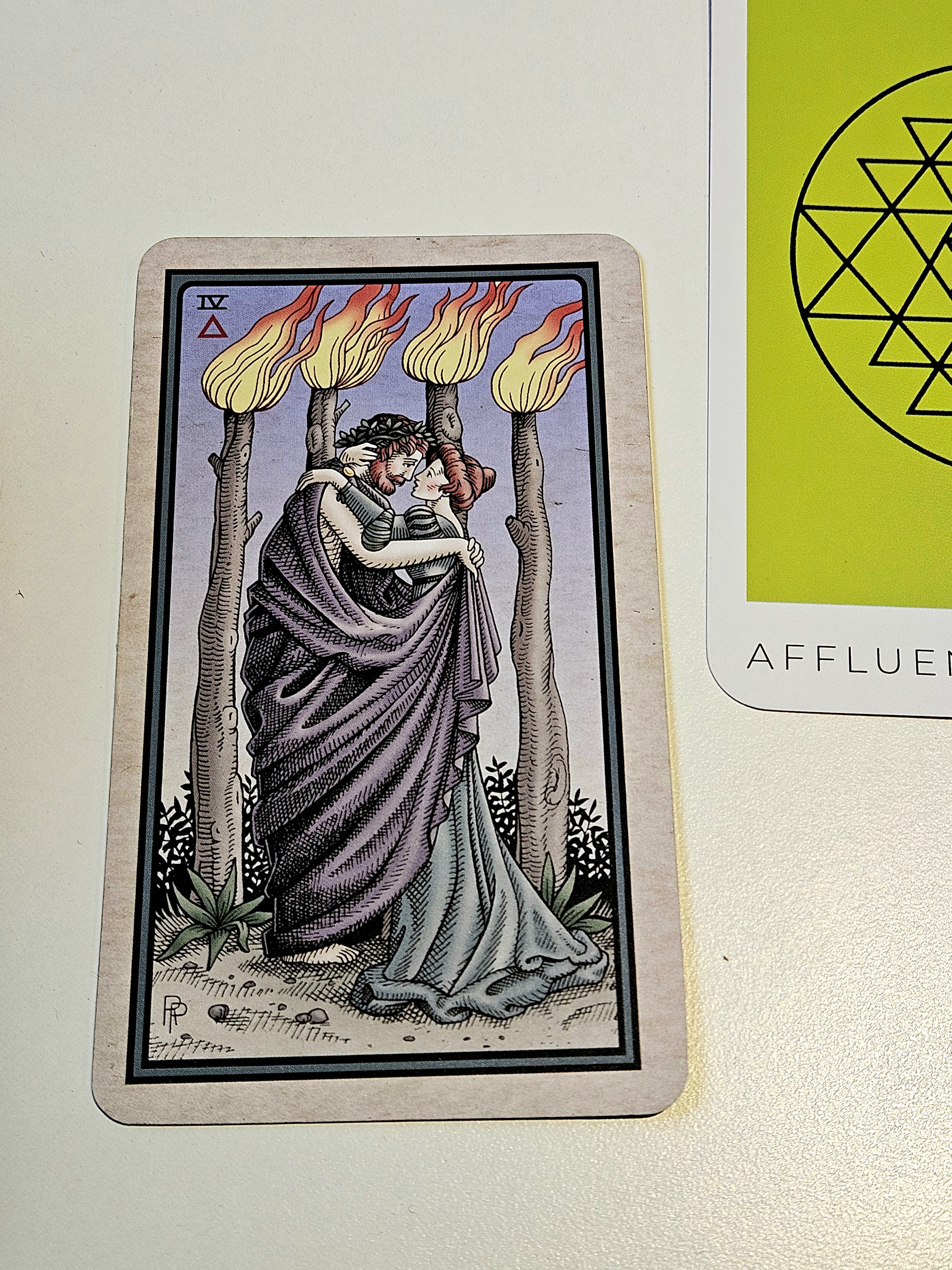
The Full Spread: Overview
All tarot cards from the Alchemical Tarot Renewed by Robert M. Place. Bridge oracle from Wisdom of the Oracle pocket edition by Colette Baron-Reid. Study the layout before reading the positional notes below.
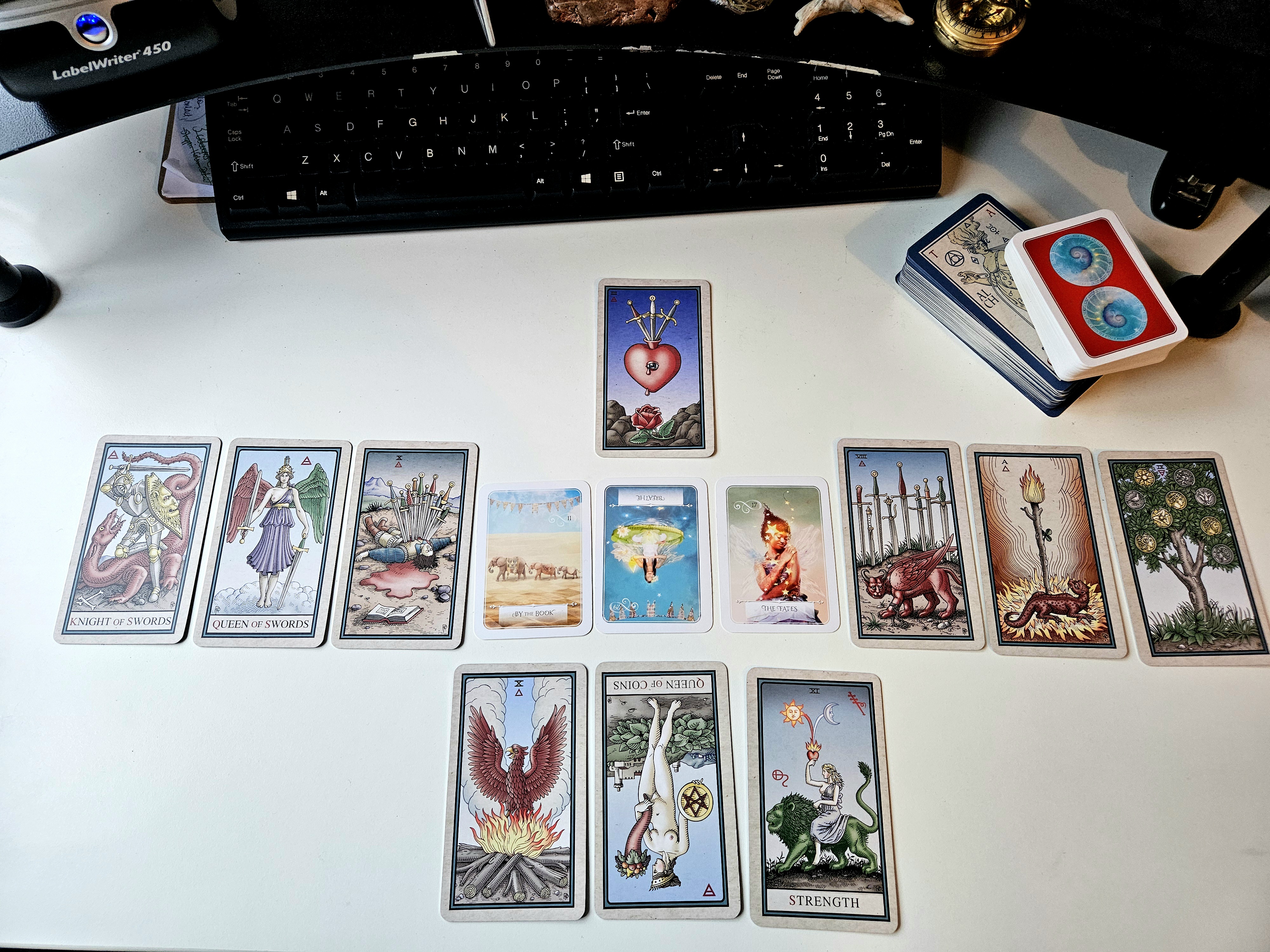
The spread: position by position
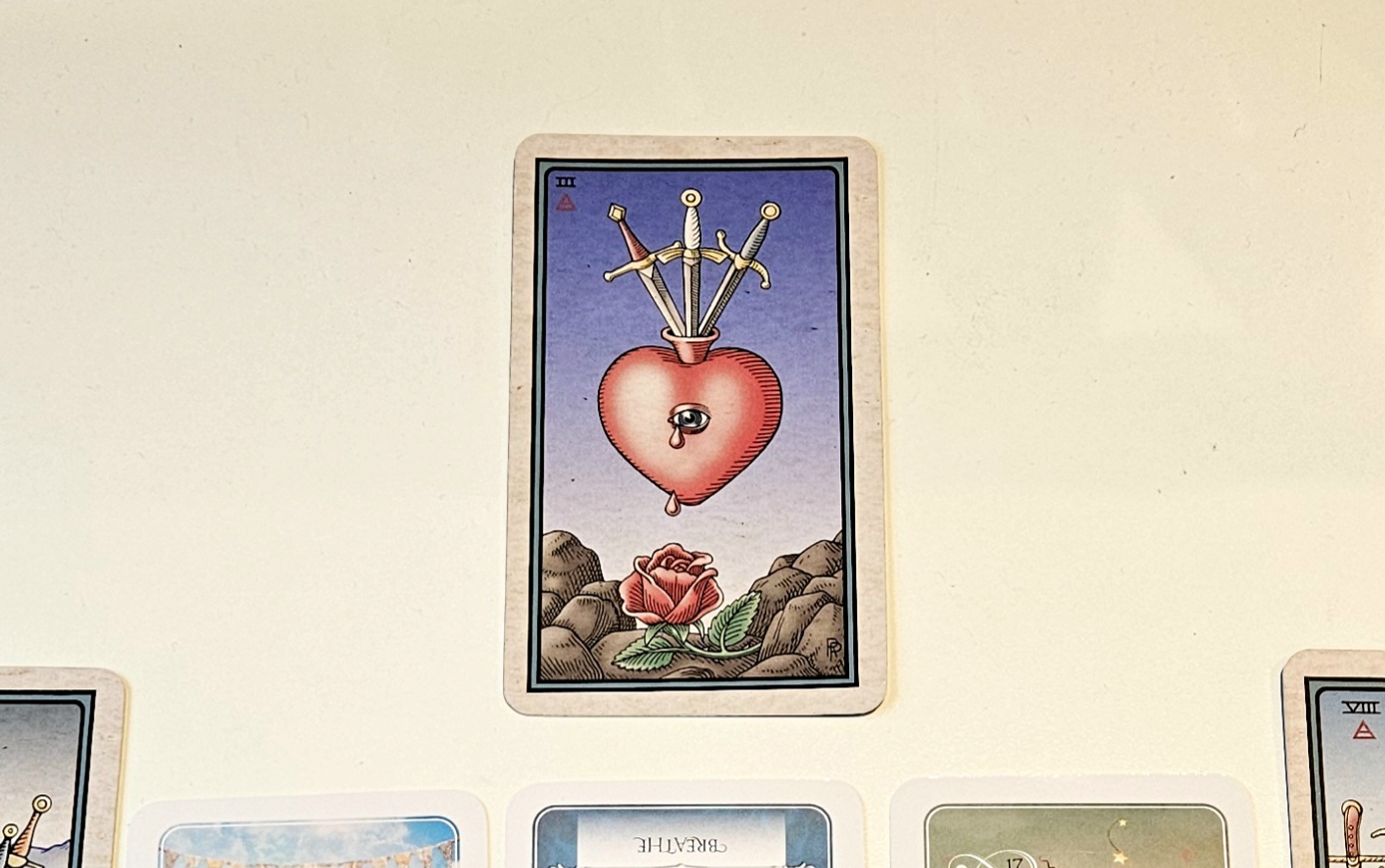
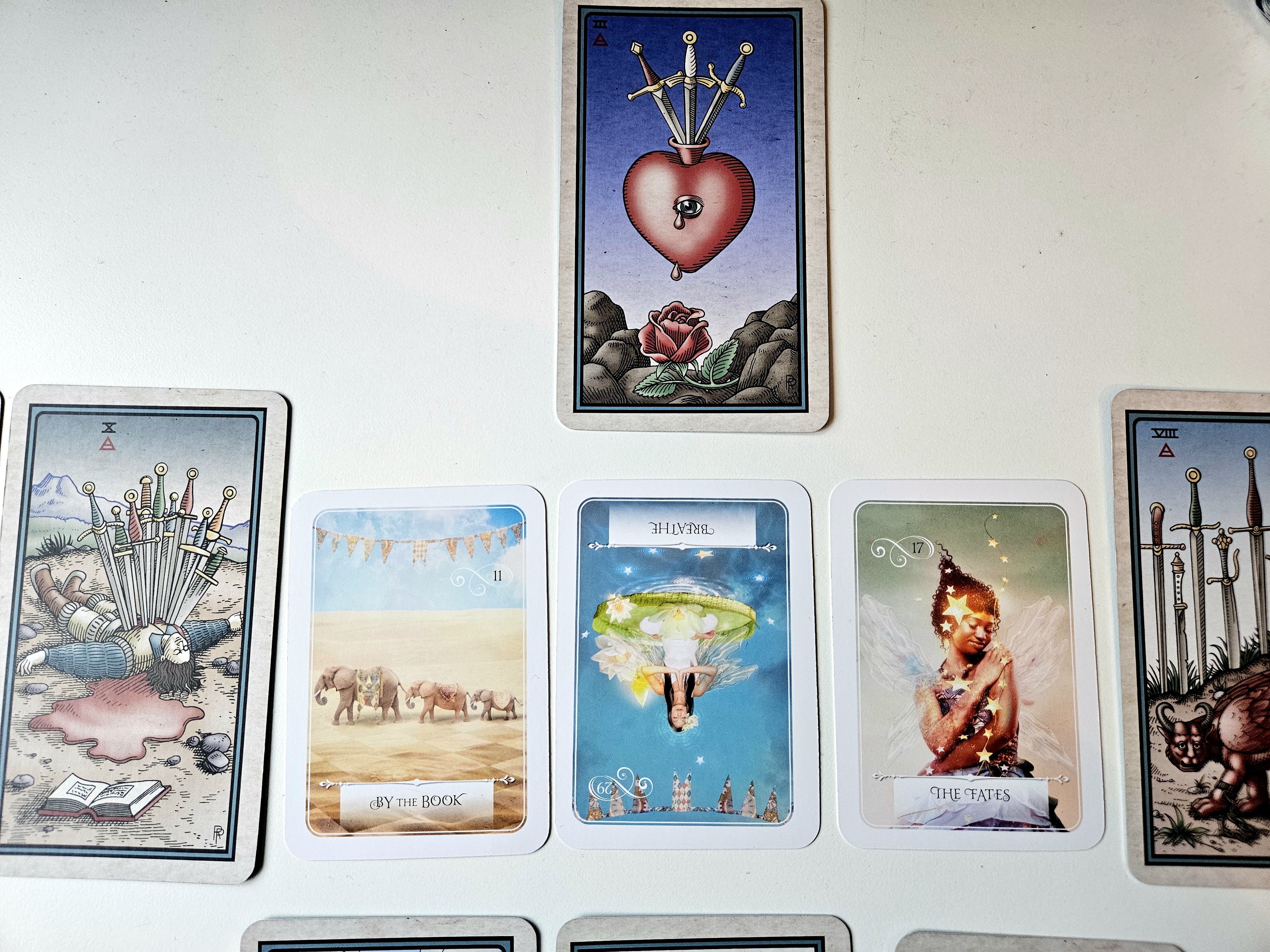
Anchor: Three of Swords
The central card. Named hurts. What is known and acknowledged. This card sets the energetic starting point of the reading: what is already on the table between reader and seeker.
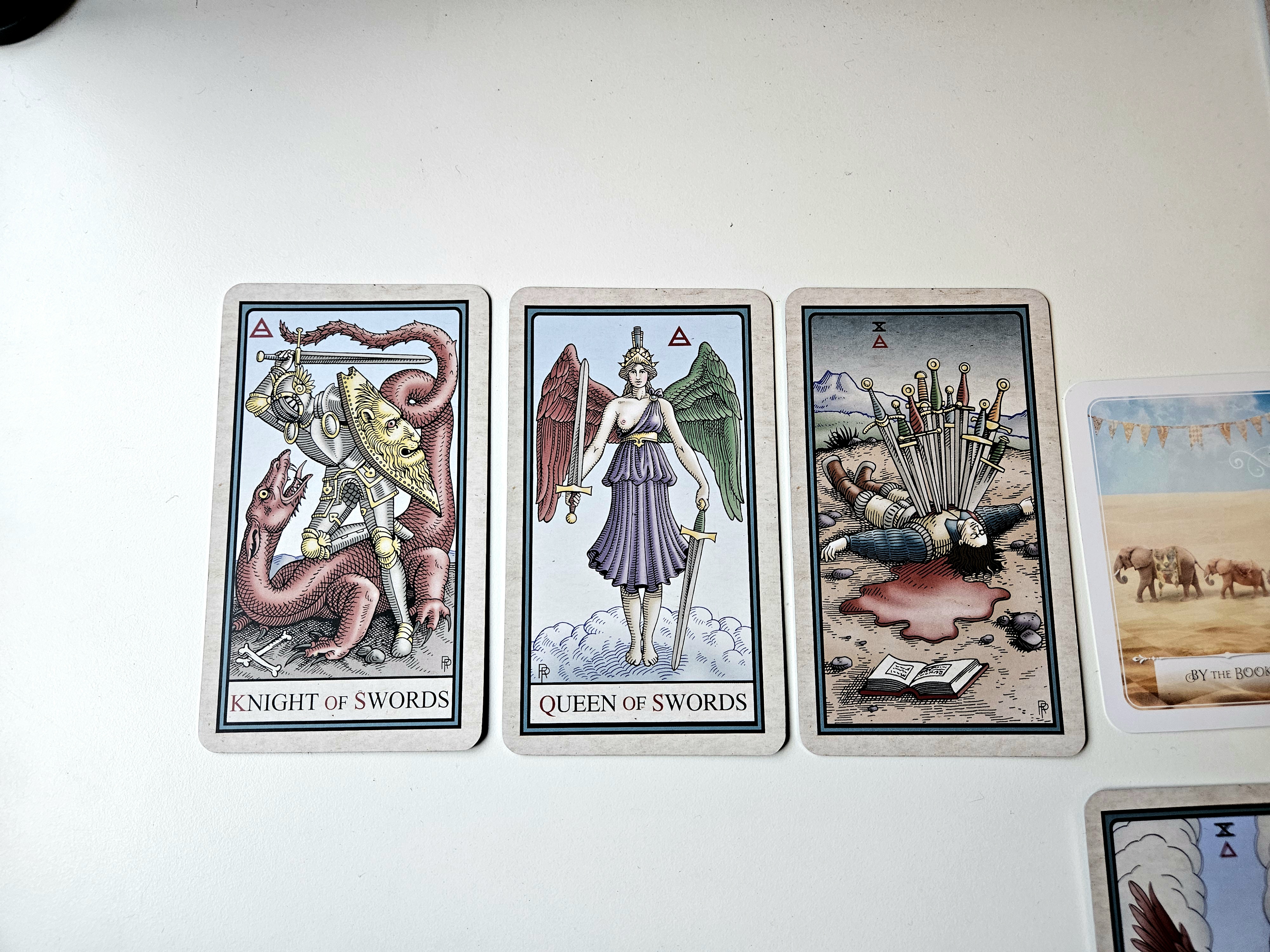
Left: The Relationship and The Betrayal
Knight of Swords · Queen of Swords · Ten of Swords
Asked to show the relational dynamic the seeker was navigating: specifically the experience of betrayal she had described. What does the energy of this relationship look like?
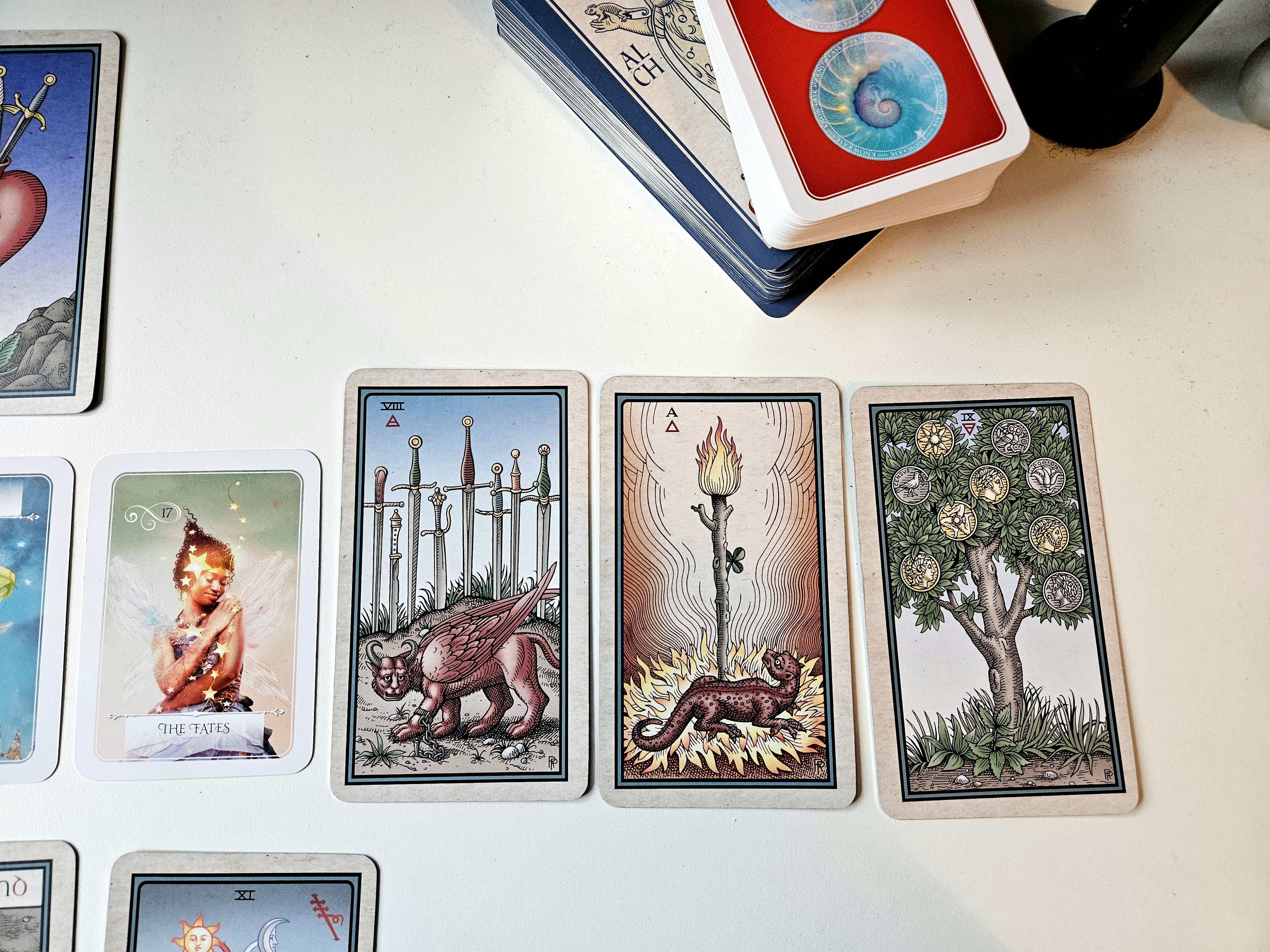
Right: Family and Other Relationships
Eight of Swords · Ace of Wands · Nine of Pentacles
Asked to show the familial landscape alongside the primary situation. What conditions and opportunities exist in that broader relational space?
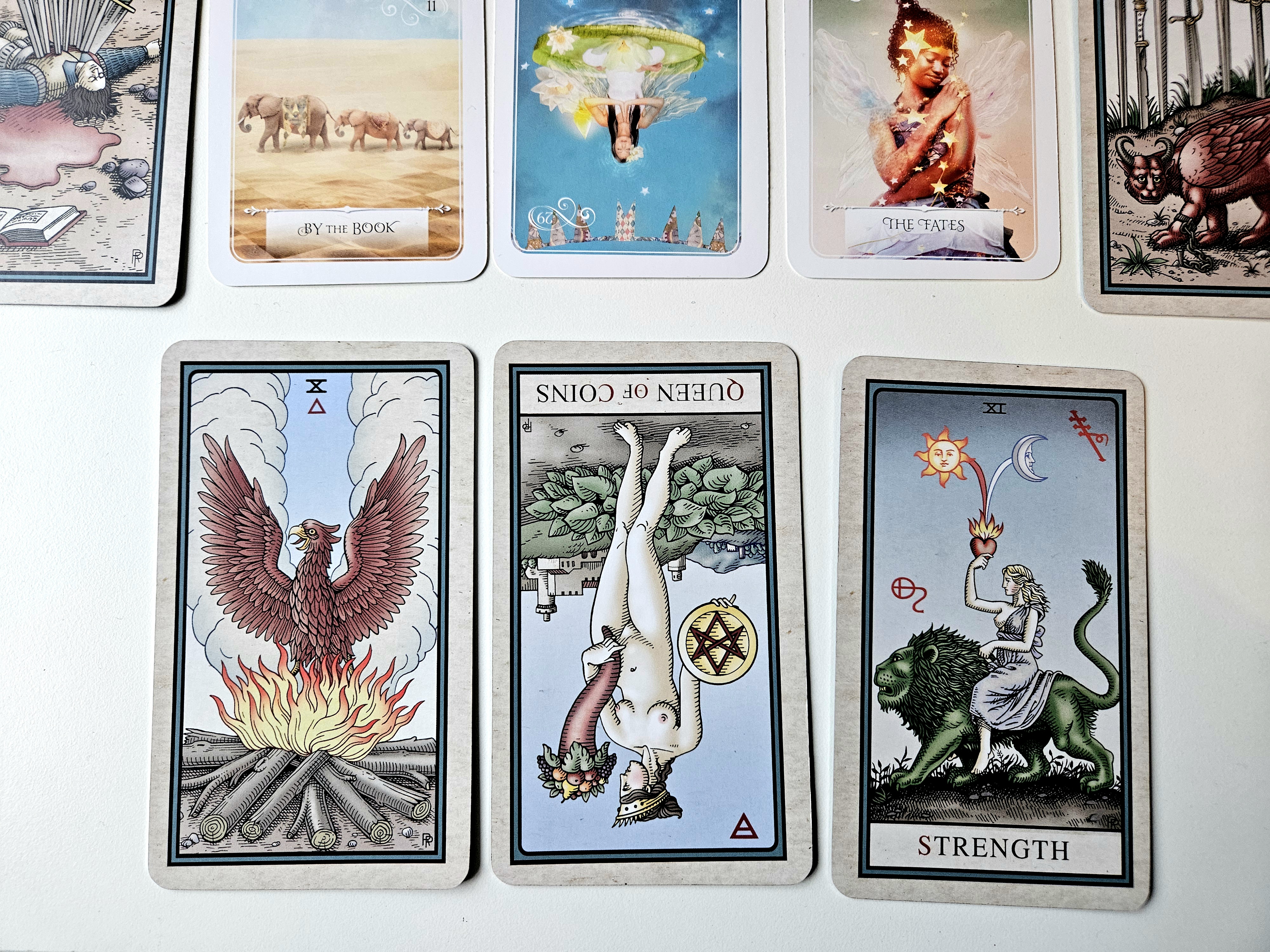
Base: The Seeker's Current State and Resources
Ten of Wands · Queen of Coins (reversed) · Strength
Asked to show the seeker herself: her current energetic state, her personal resources, what she is carrying into this situation. This is her foundation. What does it tell you?
Bridge: The Opportunity
Wisdom of the Oracle pocket edition by Colette Baron-Reid
By the Book · Breathe (reversed) · The Fates
Asked to bridge what the tarot was showing with the opportunity available to the seeker. Not what she needs to do, but what is possible from where she is standing. Where is the opening?
Practitioner Invitation
The spread and positional intent are above. The interpretation is yours to work with.
How would you navigate this reading? What would you prioritise? How would you use the loosen-the-grip framework to bridge the gap between where this seeker was sitting and what the cards were showing her? What do you see as the opportunity in this spread?
Share your insights with Leigh at [email protected]