
A question came up recently in a tarot group about whether a new collaboration was trustworthy. The person asking did not want to use a blunt yes/no question, but the suggestions quickly moved in that direction: “Can I trust this person?” or “Will this work out?”
My first instinct with a question like that is not to make the cards carry the whole weight of certainty. I would first ask what can already be known in ordinary reality. What has been agreed? What is in writing? What has this person actually done? Are their actions consistent? Are expectations clear? Has anything practical been checked before the reading is asked to decide what the situation means?
That distinction matters.
The structural problem with many yes/no questions is that they compress the situation below the level at which tarot can describe it accurately. They ask for a final answer before the reading has established what kind of answer is needed.
A yes/no question can be clean. It can also be too small. In the collaboration example, the real question may not be “Can I trust this person?” It may be: what evidence of trust is already present? Where is the agreement vague? What behaviour needs closer attention? What boundary would make the situation clearer?
Those are not evasions of the question. They are more accurate ways of entering it.
Why yes/no can fail structurally
Traditional yes/no tarot methods usually rely on a pre-set rule. Upright cards may mean yes and reversed cards may mean no. A majority of “positive” cards may suggest yes. A majority of difficult cards may suggest no. A reader may use suits, elements, major and minor arcana, or a pre-agreed indicator card.
There is nothing inherently wrong with this. A defined method can be useful, especially when the question is narrow, the terms are clear, and the reader has agreed on the grammar before the draw.
The difficulty begins when the question is emotionally loaded, practically complex, or dependent on information that has not yet been named. A yes/no method can still produce an answer, but the answer may arrive too early. It closes the reading before the field has been properly described.
This is why I rarely begin there.
In my own work, I want to know what the cards are showing before I reduce the matter to yes or no. Are they showing movement or resistance? Openness or contraction? A beginning or an exhaustion? A clear path or a blocked one? A person facing the matter directly or turning away from it?
That symbolic evidence often tells me more than a binary answer would.
What yes can look like in the image
If I am reading visually, yes often appears as opening.
A figure faces forward. A road clears. A hand extends. A gate opens. A horse moves with direction. Light enters the card. Yellow, gold, white, or clear blue may appear as illumination rather than decoration. The image has coherence. Something in it seems available.
Aces often carry this quality because they show the beginning of a suit’s principle. But even Aces do not all say the same yes.
The Ace of Wands says yes to action, desire, courage, creative force, and movement.
The Ace of Cups says yes to emotional opening, receptivity, healing, and connection.
The Ace of Swords says yes to truth, naming, decision, and cutting through confusion.
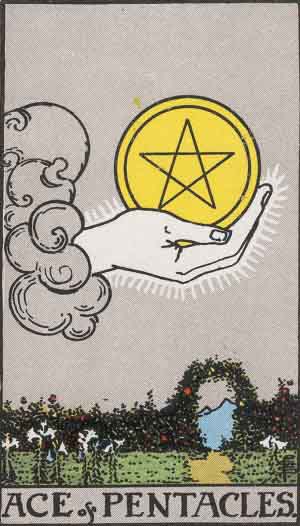
The Ace of Pentacles says yes to what can be grounded, held, tested, built, or verified in the material world.
That distinction matters in practical readings. If the question is about a contract, collaboration, payment, shared work, or a physical commitment, the Ace of Pentacles may carry more relevant evidence than the Ace of Cups. If the question depends on truth being spoken plainly, the Ace of Swords may matter more than a softer card of emotional promise.
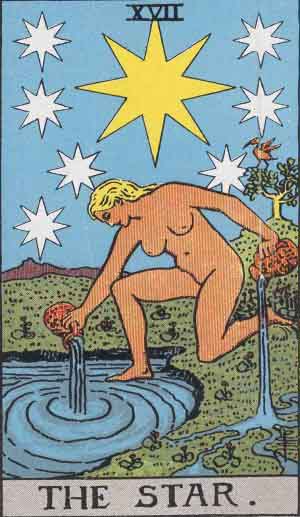
So yes is not simply “a good card.” It is the image opening in the direction of the question. The sequences below use Rider Waite Smith imagery as curated evidence lines, not a spread you are meant to copy.
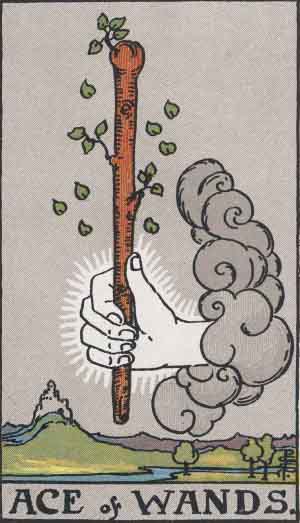
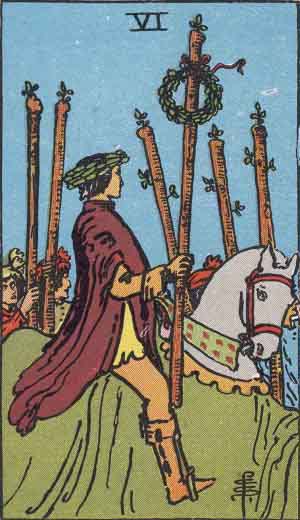
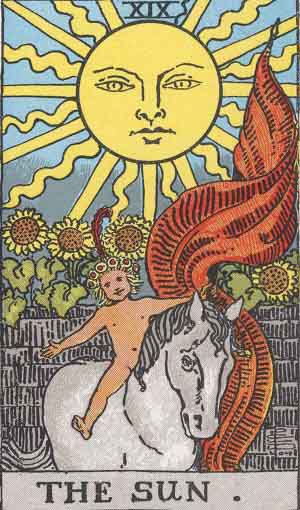
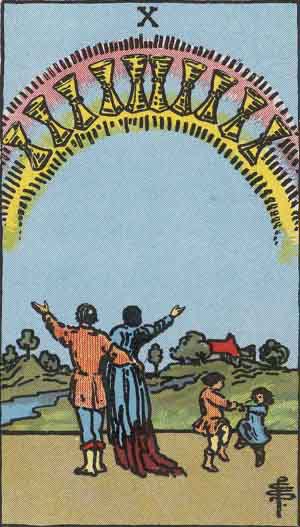
What no can look like in the image
No is not always rejection. Sometimes it is a boundary. Sometimes it is delay. Sometimes it is the reading showing that the proposed path does not hold.
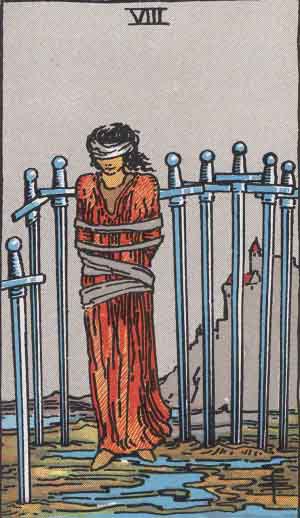
Visually, no may appear as closure, obstruction, depletion, or refusal. A turned back. A blindfold. Crossed arms. A closed gate. A heavy wall. A bound figure. Spilled cups. Fallen bodies. Fragmented architecture. A dark or muddied colour field. Movement away from the centre. Figures who do not meet each other. A road that stops. A path blocked by water, stone, swords, fear, or exhaustion.
The later cards of a suit can show where an Ace has become strained or depleted.
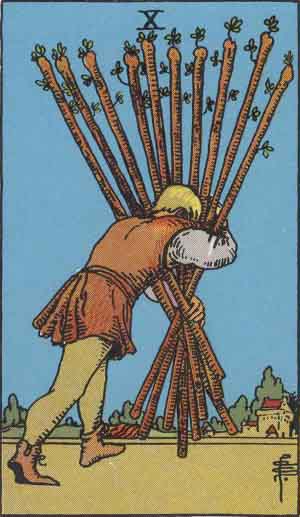
The Ace of Wands opens fire. The Ten of Wands may show fire as overload.
The Ace of Cups opens feeling. The Five of Cups or Eight of Cups may show feeling as disappointment, loss, or departure.
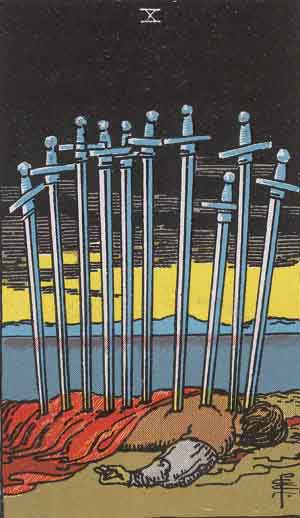
The Ace of Swords opens clarity. The Two of Swords may block it, while the Ten of Swords may show the collapse of a thought-form.
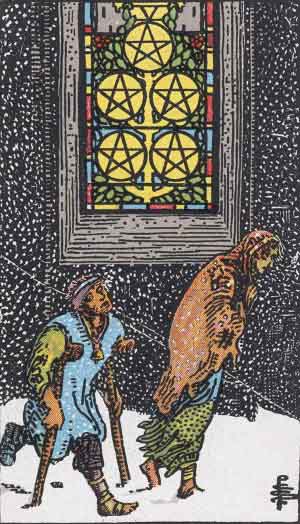
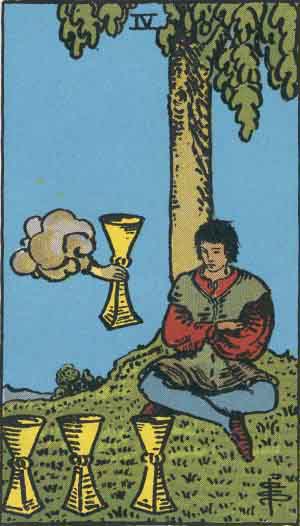
The Ace of Pentacles opens material possibility. The Four of Pentacles may close access, while the Five of Pentacles may show lack, exclusion, or insufficient support.
This is why fixed yes/no lists can become blunt instruments. The card title is only one part of the answer. The behaviour of the image is often more precise.
When the answer is not clear yet (not enough light yet)
A mature reading needs room for a third possibility: not yet, not clearly, not in that form, or not with the information currently available.
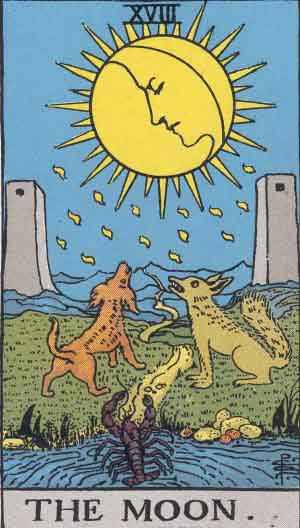
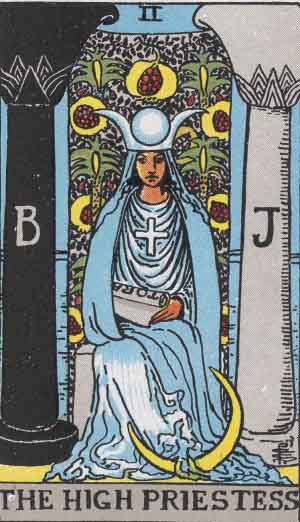
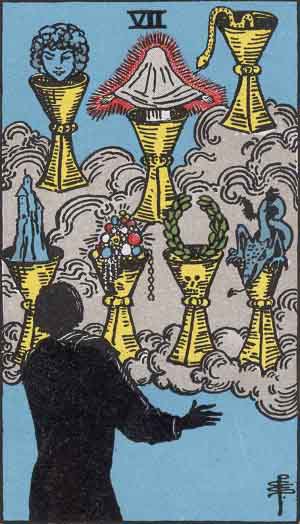
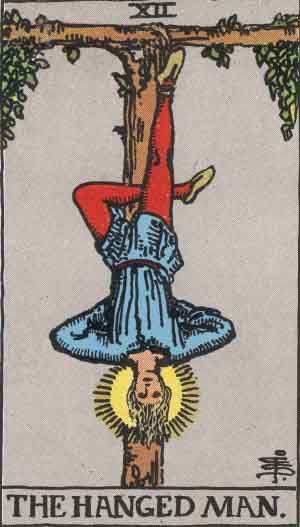
The Moon may show hidden factors, projection, uncertainty, or low visibility. The Hanged Man may suspend the matter until it can be seen from another angle. The Two of Swords may show that the querent is not ready to see or decide. The Wheel of Fortune may show changing conditions. The Seven of Cups may show too many imagined possibilities. The High Priestess may indicate that the answer exists, but direct questioning is not the way it will be reached.
This is not a failure of the reading. It may be the most accurate part of it.
Some questions are not asking for an answer. They are asking for relief from uncertainty. If that is the real need, the cards may show the uncertainty itself: where it lives, what feeds it, and what kind of clarity would actually help.
Returning to the collaboration question
With the collaboration question, “Can I trust this person?” is understandable. But it may not be the strongest question.
Trust is not only a feeling. It is a pattern of evidence. It lives in behaviour, timing, follow-through, clarity, reciprocity, and repair. A yes/no answer can skip over all of that and give the querent a conclusion without showing the structure underneath it.
If the cards show open movement, clear communication, grounded Pentacles, direct gazes, and coherent interaction, that suggests one kind of field. If they show evasion, crossed swords, turned backs, overburdened Wands, withheld coins, or figures moving in opposite directions, that suggests another.
The practical implication is simple: the better question is the one that lets the reading show its evidence.
Not every tarot question needs to be more mystical. Often it needs to be more exact.
This is also where The COMPASS Method™ begins before the cards are drawn. The question itself is part of the reading field. If the question is too compressed, the answer may be compressed too. If the question gives the cards room to describe what is opening, closing, hidden, strained, or ready to move, the reading has more chance of telling the truth in a useful form.
Further reading: The COMPASS Method™ and Tides of Knowing practice work.
Quick Answer
For a trust or collaboration question, yes/no often arrives before the field is described. Read what the image opens, closes, or withholds first; the binary can follow once symbolic evidence is visible.