
Tarot interpretation tool

Repeating Card Meanings

Choose the tarot card that keeps appearing to explore what the pattern may be asking you to notice.

Choose a card

For full searchable reference pages, visit the repeating card pattern library.
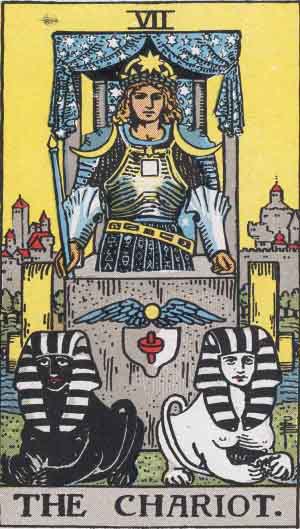
The Chariot tarot card

The Chariot

Repeated Chariot appearances often mark seasons of directed movement, competing drives, or the need to steer conflicting forces toward one aim. The Seeker may have momentum without integration, or will without a clear destination. Repetition can ask whether direction is genuinely chosen or imposed, and whether emotion is being mastered or merely overridden. The card points to the work of holding the reins: committing to a path and disciplining the energy required to move it forward.

When this card appears again and again, the question is never whether you can move forward: it is whether the forces pulling at you are genuinely under your direction, or whether you have confused speed with intention.

Core Repeating Message

The Chariot does not appear for the passive seeker. It comes for someone in motion, or someone who urgently needs to be. Yet its repetition signals not a victory lap but a recurring confrontation with one of the deeper challenges in any life: the task of holding opposing forces in genuine tension and driving forward anyway, not by suppressing the contradiction but by mastering it.

In traditional imagery, the charioteer stands upright, holding the reins of two creatures that are pulling in different directions. There is no whip. There is often no road. The vehicle moves by the force of the driver’s will, concentration, and, beneath both, a kind of inner unity that has not erased the conflict but has learned to contain and direct it. The armour is ceremonial as much as protective. The charioteer has earned something. But the posture is still taut, still watchful. This is not ease. This is mastery in active practice.

When the card repeats, several patterns are worth examining honestly.

The first is the pattern of the forced driver: the person who has learned to override internal conflict by sheer willpower, who treats their opposing impulses as enemies to be subdued rather than forces to be integrated. They move forward, yes. They are productive, disciplined, often admirable from the outside. But inside, the tension is maintained at considerable cost. They are holding those reins so tightly their hands are white. This is not yet The Chariot’s mastery; it is its early stage, and the body, the relationships, or the creative life will eventually register the toll. When this card repeats for such a person, the invitation is not to try harder but to examine the quality of the control being exercised. Is this direction arising from genuine inner alignment, or is it the exhausting performance of someone who has not yet resolved what they actually want?

The second pattern is the speedless charioteer: the person who has significant capacity for forward movement but cannot seem to actualise it because the opposing forces within them are too evenly matched. They are perpetually deliberating. One part wants the career pivot, another fears the financial instability. One part wants the relationship to deepen, another fears the vulnerability required. The chariot sits motionless, the sphinxes pulling left and right with equal strength, and nothing moves. This person is often deeply frustrated with themselves. They read as capable from the outside and feel stuck from the inside. The Chariot repeating here is asking: which of these forces is actually yours, and which belongs to a story you inherited? Because the vehicle will not move until the driver genuinely takes the reins, and taking the reins requires knowing which hand is your own.

The third pattern is the misdirected driver: someone who is moving very quickly, decisively, even successfully by external measure, but in a direction they have not examined recently (or ever). The chariot is in full motion; the momentum is real; the problem is that the destination was chosen a long time ago, or chosen for reasons that no longer hold, or chosen for someone else’s expectations and never quite chosen by the self at all. When this card repeats for such a person, it arrives as a quiet disruption: have you looked up lately? Do you know where this is going? The speed that felt like freedom begins to register as a kind of captivity, because all that forward motion is foreclosing on alternatives they never stopped to weigh.

Beneath all three patterns, the Chariot’s repeating question is about the relationship between will, direction, and inner alignment. Not willpower in the sense of grinding endurance. Not direction in the sense of a five-year plan. And not inner alignment in the sense of easy peace. The charioteer is not at peace, not in any simple sense. They are holding tension. But the tension is directed, contained, and in service of movement. That is the distinction. That is what the card is asking the seeker to develop.

The Chariot is associated with Cancer in some traditions, which at first appears paradoxical: the sign of home, emotional depth, and the interior life, driving a war chariot? But this is precisely the card’s sophistication. The greatest mastery of direction is not the absence of feeling but the integration of it. The driver who has no emotional life is not steering with full capacity. The driver who is overwhelmed by it cannot steer at all. The Chariot asks for both: the feeling acknowledged, and the hands still on the reins.

In numerological terms, seven is the number of testing, of the inner journey, of the point in any cycle where what was built must prove its integrity under pressure. The Chariot is not the beginning of the journey (The Fool), not the gathering of tools (The Magician), not even the first great structure (The Emperor). It is the moment those resources are put into motion under real conditions, under genuine opposition, in an environment that will not accommodate hesitation. Seven asks: what are you made of when it actually matters?

For the seeker who keeps drawing this card, the work is not to become someone different. The opposing forces are not flaws to be corrected. The tension is not a problem to be solved. The Chariot asks the seeker to become genuinely capable of holding what they already are, all of it, in one directed hand, and moving forward from that wholeness into a life that is actually chosen, actually theirs, and moving in a direction they can look at without flinching.

This is the card’s repeating gift: not comfort, but capacity. Not resolution, but direction. Not the absence of conflict, but the skill to drive through it.


When This Card Repeats Weekly

A week of Chariot repetition tends to feel either intensely focused or intensely pressured, and the task is to distinguish between these two experiences clearly, because they can look identical from the outside and feel very similar from the inside.

If the week is characterised by genuine focus, the Chariot appearing multiple times is confirming that the energy is coherent and the direction is sound. The seeker is moving with their full capacity behind them, and the card is a marker of momentum rather than a warning. In this case, the question to sit with is not “what is wrong?” but “what is this momentum building toward, and am I clear about that destination?”

If the week feels pressured, the repetition is worth investigating more carefully. Chariot weeks can carry a driven, relentless quality: the sense that one must push, must produce, must not let up. This is often a sign that external expectations or internal perfectionism are acting as the driver rather than genuine intention. The seeker is moving, but the motion is reactive. They are fleeing something as much as pursuing something, and the distinction matters enormously for where they will end up.

Weekly, the Chariot asks: are you moving forward this week, or just moving? Are you tired because you are genuinely spent from meaningful effort, or tired because you have been running at full speed without checking the direction? Even a brief pause to take stock, to name what is actually being pursued and why, can shift a week from draining momentum to sustaining it.


When This Card Repeats Monthly

A month of recurring Chariot energy is significant and worth examining structurally. The Chariot over weeks suggests a theme running through daily life at a level of some urgency. Something in the seeker’s life is demanding directed movement, genuine mastery, or a resolution of competing impulses, and it has been demanding this consistently enough that the cards keep returning to it.

Monthly, the Chariot often appears when a seeker is in the middle of a period of high output: building something, launching something, sustaining something that requires their continuous effort and focus. In these months, the card is both encouragement and reminder. Encouragement: your effort is registering, the energy is real, continue. Reminder: check your trajectory. A month is long enough that even a slight misalignment of direction compounds significantly. The charioteer who discovers after four weeks that they have been moving at speed in the wrong direction has further to travel back than the one who checks the course weekly.

Monthly Chariot repetition can also appear during periods of genuine internal conflict: a month in which two major life forces are pulling against each other and the seeker has not yet found a way to move forward that honours both. The card’s monthly repetition here is patient but persistent. It is not asking the seeker to choose one impulse and abandon the other. It is asking them to develop the capacity to drive with both, which is harder, which takes longer to learn, but which produces movement that is sustainable rather than costly.


When This Card Repeats Seasonally

A season of Chariot energy signals a period in the seeker’s life that will later be recognisable as a chapter of becoming. Something is being built, tested, or driven toward that requires sustained will, inner discipline, and the ongoing mastery of forces that might otherwise scatter the energy entirely.

Seasonally, the Chariot often marks the following kinds of periods: a sustained professional push, such as the build phase of a significant project or business; a period of deliberate self-development in which the seeker is committing to practices, studies, or transformations that require consistent daily effort; a relationship period in which two people with real differences in temperament, value, or vision are working to build something together and must regularly renegotiate their direction; or a period of recovery and rehabilitation in which the body or psyche is being disciplined back to strength after a period of depletion.

What characterises all of these is the quality of sustained, directed effort under genuine conditions of opposition or difficulty. The Chariot season is not easy, but it has the particular satisfaction of effort that is genuinely one’s own. At the end of a Chariot season, the seeker typically knows more about what they are made of than they did at the start.

The shadow risk of a Chariot season is the drift into compulsive drive: the loss of the ability to stop, rest, or recalibrate. The card appearing seasonally is worth monitoring for signs of this. If the seeker cannot slow down without anxiety, cannot rest without guilt, and cannot examine their direction without feeling threatened by the question, the Chariot has shifted from mastery into compulsion. This is not failure; it is information. The card appearing again under these conditions is asking them to remember that the charioteer who cannot stop is not actually in control of the vehicle.


When This Card Repeats Across Years

The Chariot appearing across years is one of the more distinctive long-arc patterns in the Major Arcana. It suggests that the seeker has a recurring, deep-seated encounter with the question of will, direction, and the mastery of inner conflict, and that this question is woven into the fabric of their development in a fundamental way.

Across years, this pattern often belongs to a particular kind of person: someone who came of age in an environment that required them to develop a strong, directed will early, often as a survival response. Children who had to take charge, manage chaos, mediate between adults, or achieve their way into safety learn to drive early and hard. The Chariot returns across their adult life asking them to examine this: is the driving still necessary in the same way? Has the original urgency passed, even while the driven quality has remained? Are they directing their life, or running from the fear of what happens when they stop?

The years-long Chariot pattern can also belong to someone whose fundamental life purpose involves navigating contradiction at a high level: the leader who must hold multiple competing stakeholder interests and move forward anyway; the artist who is both fiercely private and deeply desirous of audience, and must drive their work forward despite that tension; the activist who holds both radical critique and pragmatic action simultaneously and must keep moving despite the apparent contradiction. For these seekers, the Chariot’s recurring appearance is not a problem but a description. It is naming the nature of their work.

Across years, the growth arc the Chariot maps is from control to mastery. Control is effortful, grip-heavy, and brittle under genuine pressure. Mastery is alive, responsive, and ultimately easier than it looks, because it has integrated rather than suppressed. The seeker who has worked with the Chariot across years is recognisably different at year seven than they were at year one: still driving, but no longer white-knuckled; still in motion, but no longer terrified of stillness; still commanding, but genuinely at ease with the forces they carry rather than constantly fighting them.


Life Area Interpretations

Love & Relationships

In love and relationships, the Chariot’s repetition points toward the dynamics of momentum, direction, and opposing wills within the relational field.

For the seeker who is single, the Chariot appearing repeatedly in the relational position can indicate someone who is in a kind of forced drive when it comes to love: either charging toward relationships with such purposeful energy that potential partners feel pursued rather than courted, or alternatively, holding themselves so firmly in directed solitude that no one can get close enough to form a genuine connection. The card here is asking: what are you actually moving toward? And are the forces that govern your relational life genuinely yours, or are they inherited blueprints, old survival strategies, or someone else’s narrative about what you should want?

For the seeker in a relationship, the Chariot’s repetition often flags a dynamic in which the partnership has competing directional energies that have not been successfully integrated. Two people pulling in different directions, not necessarily about large things, but about the lived texture of daily movement: pace, ambition, timing, the amount of rest versus the amount of doing. The relationship is in motion but the motion is slightly uneven, slightly effortful, and each partner is managing their side of the tension rather than genuinely driving together.

This is not a death sentence for the relationship. The Chariot is, after all, a card of eventual mastery. But it is asking both people to examine whether they are genuinely oriented in the same direction, or whether they have been assuming alignment while actually navigating a subtle but persistent divergence. The conversation that the Chariot is calling for in a relationship context is not dramatic but it is necessary: where are we going, what are we building, and are we actually building it together?

In its more difficult expression, the Chariot in a relationship context can indicate a dynamic in which one partner has effectively taken the reins entirely, and the relationship is moving at their speed in their direction with very little genuine co-navigation. This can feel like decisive leadership from the inside of the driving seat and like being carried rather than partnered from the passenger’s experience. When the Chariot repeats here, it is asking for genuine shared direction, not passenger comfort.


Career & Purpose

The Chariot is one of the most directly career-relevant cards in the Major Arcana, because it speaks precisely to the conditions of professional life: the need for sustained directed effort, the management of competing demands, the question of where one is actually heading and why.

When this card repeats in career contexts, the first question is always about genuine direction versus performed momentum. Many professional seekers are moving very fast in their career and have not examined the destination in some time. The Chariot appearing here is not critical of the speed; it respects the drive. But it is asking the seeker to look up from the instrument panel occasionally and confirm that the destination still resonates. That the career being built is the one they actually want, not simply the one they began building in their twenties under a different set of values and haven’t stopped to reconsider.

For seekers in leadership or management positions, the Chariot’s repetition often points to the central challenge of that work: holding competing priorities, timelines, team dynamics, and strategic directions simultaneously, and continuing to move forward without losing either the big picture or the human detail. This is Chariot work in its most literal professional form. The card appearing here is a marker of the intensity of this period and an invitation to examine whether the style of leadership being practised is genuinely integrative or primarily dominant. The leader who controls by suppression and force is effective in the short term and brittle in the long one. The leader who has learned to hold tension while continuing to move is far more durable.

For seekers who are stuck in their career, unable to move despite genuine desire to do so, the Chariot’s repetition is pointing to the internal dynamic rather than the external obstacle. The two sphinxes pulling in different directions are internal: ambition pulling one way, security the other; the desire for meaningful work pulling one way, the need for financial stability the other; the call toward creative expression pulling one way, the expertise invested in a technical field the other. The card is not telling the seeker which way to go. It is asking them to stop pretending that both impulses can be indefinitely honoured without choosing a primary direction, while being clear that choosing a direction does not require abandoning the other force entirely, only learning to carry it without letting it halt the vehicle.


Money & Stability

Money and the Chariot share a particular relationship that is worth naming directly. Financial life is one of the domains in which the competing impulses the Chariot carries are most commonly felt: the desire for security pulling against the desire for freedom; the impulse toward investment and growth pulling against the impulse toward immediate use and enjoyment; the drive toward financial independence pulling against the learned helplessness or fear of numbers that many seekers carry from childhood.

When the Chariot repeats in financial contexts, it is usually pointing to one of two patterns. The first is the seeker who is working very hard financially but whose financial direction has not been clearly examined or chosen. They are earning, spending, saving, and investing in ways that were largely inherited or habitual rather than genuinely constructed, and the Chariot is asking them to take the reins of their financial life in a more deliberate way: to look at where the money is actually going and to assess whether that direction matches what they say they value.

The second pattern is the seeker who is financially paralysed by the competing forces of their own financial psychology. They cannot save because one part of them believes it is futile, while another part wants the security. They cannot invest because one part of them fears loss absolutely, while another part recognises that inaction also has a cost. They are motionless in the chariot, the two financial impulses exactly balanced, and nothing moves. The Chariot here is not asking for certainty; it is asking for a decision. Any genuine forward movement in the direction of financial agency, however imperfect, is better than the paralysis of perpetual deliberation.


Spiritual Growth

The Chariot’s spiritual dimension is one of its most nuanced contributions to the Major Arcana sequence. Coming after The Lovers, which asks the seeker to identify what they genuinely value and to choose from that place of inner alignment, The Chariot asks what happens next: now that you know, can you actually move from that knowing? Can you translate inner alignment into outer directed action?

Spiritually, the Chariot repeating suggests a seeker who is at a particular stage of development: past the early openings and revelations, past the period of simply receiving insight, and now in the phase where the insight must be lived. This is harder than receiving it. It is easy to have a profound experience of unity, clarity, or purpose in meditation or in a reading. It is considerably more difficult to drive your actual life from that place, with the same clarity, amid the ordinary competing demands of daily existence.

The Chariot’s spiritual repetition often marks what might be called a phase of embodied discipline: the period in which the seeker is learning to bring their spiritual understanding into genuine relationship with the material world, rather than keeping it safely sequestered in the sacred space of practice. This can feel unglamorous. It can feel like the spiritual work has become less interesting, more grinding, more about showing up than about revelation. This is not a regression; it is a deepening. The charioteer who can only drive on ceremonial roads has not yet achieved the card’s full teaching.

For seekers on more formal spiritual paths, the Chariot’s repetition can indicate that they are being asked to examine the difference between spiritual discipline and spiritual compulsion. Discipline is directed, purposeful, and genuinely in service of growth. Compulsion is fear-driven, rigid, and often more about avoiding something than moving toward something. The charioteer who is fleeing rather than advancing has not yet found the card’s gift.


Emotional & Mental Patterns

The Chariot’s relationship to emotion is, as noted above, one of its central paradoxes and central teachings. The card does not suppress emotion. It integrates it. But for many seekers, the lived experience of Chariot energy is initially one of emotional suppression, because that is how they have learned to drive: by ignoring or overriding the feeling in service of the forward motion.

When the Chariot repeats in the emotional and mental domain, it is most often pointing to a seeker who has developed a highly capable, directed, achieving persona at considerable emotional cost. They are functional, effective, and often admired. They are also frequently exhausted in a way they cannot quite name, cut off from their own emotional signal, and prone to a low-level sense of meaninglessness even when succeeding by every external measure. The Chariot asks: what has been left in the chariot’s wake? What has not been permitted to accompany the journey?

Mentally, the Chariot can pattern as a tendency toward decisive thinking that has become somewhat rigid: the seeker who has learned to think their way through problems quickly and efficiently, but who has lost the ability to sit with ambiguity long enough to let more complex understanding emerge. The mind that drives is effective; the mind that only drives is eventually limited. The card repeating in this domain is an invitation to occasionally allow the chariot to rest, not because forward motion is wrong, but because some of the most important terrain cannot be covered at speed.

For seekers managing anxiety, the Chariot’s repetition can indicate a coping pattern in which the anxiety is managed by staying in motion: always busy, always productive, always purposeful. This is not entirely without merit; directed action is a genuine resource for anxious minds. But the pattern has a ceiling, and the Chariot appearing repeatedly is often marking the point at which that ceiling has been reached. The motion is no longer managing the anxiety; it is performing it.


Family & Generational Dynamics

The Chariot carries particular significance in the family and generational context because directed will, ambition, and the management of competing forces are so often the sites of the deepest family dynamics.

For many seekers, the Chariot’s repetition in a family context traces back to a family system that either over-valued or under-valued directed drive. In families that over-valued it, the seeker learned early that forward motion was the appropriate response to difficulty, that stopping was weakness, and that achievement was the currency of love and belonging. They became excellent charioteers but at the cost of developing the capacity to simply be without producing. The card repeating across this history is asking them to examine which of their drives are genuinely their own and which are the family’s unspoken requirement.

In families that under-valued directed drive, the seeker may have grown up without adequate models for sustained intentional effort, for the discipline of seeing something through, or for the belief that their own will was a legitimate force in the world. The Chariot’s repetition here is remedial in the best sense: it is asking the seeker to claim the authority to direct their own life that was never modelled, never granted, and perhaps actively suppressed in their family of origin.

The generational dimension of the Chariot often shows up as a pattern around achievement, ambition, and the question of whose life one is actually living. Seekers who were the identified high achiever in a family system, the one who carried the family’s aspirations for upward mobility, status, or success, often find the Chariot returning throughout their adult life as the card asks: is this direction yours? The charioteer who is driving the family’s chariot rather than their own has not yet received the card’s deepest teaching.


Health & Energy

The Chariot’s energy in the body tends to register as either exceptional vitality or as the signs of sustained over-effort, and distinguishing between these two is important work when this card repeats in the health domain.

At its most vital, the Chariot in the body feels like coherent, directed physical energy: the body and will aligned, moving through the world with a sense of purpose that registers physically as well as mentally. Athletes often describe peak performance states in Chariot terms: everything available, everything directed, no wasted effort, the body and intention moving as one.

When the Chariot is in its over-effort expression in the body, the physical signs are characteristically those of sustained adrenal demand: a quality of tension that does not fully release, disrupted sleep that is light and unrestorative, difficulty with genuine physical recovery because the system cannot fully downshift, and a tendency to push through physical signals of tiredness or discomfort as though they were obstacles to be overcome rather than information to be heard.

The Chariot repeating in the health context is often asking the seeker to develop a more discerning relationship with the difference between useful physical effort and effortful physical compulsion. The body can be driven. The Chariot knows this. But the body driven past its own wisdom eventually stops cooperating with the will that is trying to direct it, and this is not failure of the body but information from a more integrated intelligence than sheer wilfulness represents.

Energy cycles are worth attending to during Chariot periods: the quality of rest, whether genuine restoration is occurring, and whether the seeker has retained the capacity to genuinely cease activity without anxiety or guilt. If they have not, this is the body’s version of the charioteer who cannot stop, and it carries the same invitation: not to abandon the drive, but to develop a more responsive and ultimately more powerful relationship with the forces being directed.


Advanced Interpretive Sections

The Shadow Expression

The Chariot’s shadow is not laziness or passivity. Its shadow is control dressed as competence.

In shadow, the Chariot seeker is someone who has substituted the performance of mastery for the genuine article. They are fast, decisive, and apparently in command. But their speed serves to avoid rather than to advance: if they are always moving, they cannot be made to stay still and feel what is happening beneath the motion. Their decisiveness is often a pre-emptive strike against genuine uncertainty. Their sense of command is frequently about being untouchable as much as about being capable.

The shadow Chariot driver manages their inner conflict by simply outrunning it. They are impressively productive, admirably focused, and they often build genuine things of value. But there is a quality of grim efficiency about it, a grimness that they can feel even when others cannot see it, and the card appearing repeatedly in its shadow expression is asking them to turn and face what is behind them in the chariot.

Control as a primary mode of relating to the world, while understandable as a response to genuinely chaotic or unsafe environments, eventually narrows the life. It keeps out what is needed as surely as it keeps out what is threatening. The shadow Chariot seeker is often lonelier than they appear, more fragile beneath the armour than anyone suspects, and quietly terrified that if they stop, something they have been outrunning will catch up. The card’s shadow asks: what is in pursuit? What would actually happen if you stood still and let it reach you?


The Integrated Expression

The integrated Chariot is one of the most genuinely impressive expressions of human capacity: someone who has developed the ability to hold significant inner complexity in a state of active, directed coherence without suppressing any of it.

This is not the person who has resolved their contradictions. The integrated Chariot has contradictions. The ambitious part and the contemplative part. The tender part and the formidably capable part. The part that wants to be seen and the part that prefers invisibility. What has changed is not the presence of these forces but the driver’s relationship with them. They are no longer enemies to be managed; they are the team that pulls the chariot, and the driver has come to know each one well enough to work with its nature rather than against it.

The integrated Chariot moves with an authority that is not imposing: it does not need to be. They are clear about where they are going and why, and this clarity is not defensive but genuinely grounded. They can change direction when the evidence warrants it without feeling that the change undermines their authority. They can rest without guilt and resume without reluctance. They have developed the capacity to be both steady and responsive, both directed and genuinely curious about where the journey is actually going.

In practical terms, the integrated Chariot is someone others are drawn to follow not because they are commanding but because they are genuinely oriented. Their will is in the service of something larger than themselves, and this is perceptible.


Why This Energy Has Not Released Yet

When the Chariot keeps appearing, the reason the pattern has not released is almost always one of these: the seeker is still confusing speed with direction; they have not yet taken genuine ownership of the forces that pull them; or they are driving toward a destination that is no longer (or never was) genuinely theirs.

The pattern around speed and direction is the most common. The seeker is moving very hard and cannot understand why the Chariot keeps returning, because surely the card represents forward motion and they are clearly in forward motion. But the card is not rewarding motion; it is asking about direction. The question it is putting to the seeker is whether the motion is actually taking them toward the life they want, or simply maintaining the appearance and feeling of meaningful forward movement.

The pattern around ownership of impulses is subtler. The seeker may have named their competing forces, may even understand intellectually that they need to hold both, but has not yet actually picked up the reins. They are watching the sphinxes pull in opposite directions and describing the dynamic with considerable insight while remaining a spectator rather than a driver. The card will keep returning until the seeker makes an actual, embodied choice to direct, not just describe, their own life.

The pattern around destination is perhaps the most difficult, because it often requires the seeker to admit that they have been driving very hard toward a life that does not actually satisfy them in the ways they told themselves it would. This is not a comfortable admission. It involves a kind of grief for the effort already expended, and it requires genuine courage to redirect. The Chariot appearing again and again in this context is patient but clear: the direction needs to be re-examined, and no amount of speed will make the wrong destination right.


What This Card Wants the Seeker to Understand

The Chariot wants the seeker to understand that genuine mastery is not the same as relentless effort, and that the two are often confused in ways that cost the seeker significantly.

It wants them to understand that the sphinxes are not enemies. The two forces that seem to be pulling them apart are both part of them, both legitimate, and both necessary for genuine forward movement. The card’s invitation is not to choose one and subdue the other but to become the kind of driver who can hold both with skill and keep moving.

It wants them to understand that stopping to take stock of direction is not a failure of will but an exercise of it. The charioteer who never looks up from the horses’ backs is not more disciplined than the one who occasionally surveys the terrain; they are less. Genuine mastery includes the wisdom to pause, to assess, and to adjust course without treating any of this as defeat.

The Chariot wants the seeker to understand that the authority they are looking for is not external. It is not in the achievement, not in the recognition, not in the evidence that others can see their capability. It is in the quality of the relationship they have with their own will: whether it is directing them from a place of genuine inner clarity or driving them from a place of fear, urgency, and the need to prove something.

Finally, it wants them to understand that there is a kind of freedom on the other side of this work that is not available to the person who has never genuinely picked up the reins. The seeker who has learned to drive their own life, with all its contradictions, with all its opposing forces, with eyes on a destination that is genuinely and fully their own, is free in a way that the person still waiting for external conditions to be perfect can barely imagine. This freedom is the Chariot’s deepest gift.


Signs the Pattern Is Beginning to Resolve

The pattern of the Chariot begins to resolve when the seeker notices they can rest without anxiety, not just physical rest but the deeper rest of not needing to be in motion to feel that they exist.

It resolves when they can articulate the destination clearly, not as an achievement target but as a genuine direction that carries personal meaning: when asked where they are going, they do not give a résumé answer but a soul answer.

It resolves when they notice that the competing forces within them, the ones that used to feel like a war, have begun to feel more like a conversation. Not resolved, not silent, but no longer pulling with equal, destructive force. One of them has been recognised as primary, and the other has been given an appropriate role in the chariot rather than a grip on the reins.

It resolves when the seeker begins to make decisions at a pace that feels genuinely chosen rather than either urgently rushed or paralytically slow, when their timing comes from inner clarity rather than anxiety or avoidance.

And it resolves, finally, when the seeker looks back at a stretch of their life and can see that it has been moving in a coherent direction, one they chose, one that reflects who they actually are, and that even the deviations and the difficult periods were part of a journey that has been fundamentally theirs. The Chariot’s resolution is not the absence of challenge. It is the presence of genuine authorship.


Reflective Questions

  1. When you imagine moving forward in your life, what is the first feeling that arises? Is it clarity, urgency, fear, or something else, and what does that feeling tell you about the nature of the forward motion you are in?

  2. What are the two most significant competing forces or impulses within you right now, and when did you last examine which of them is actually yours versus which was inherited, expected, or adopted for reasons that may no longer apply?

  3. Is there a destination you have been moving toward, in career, relationship, identity, or any other domain, that you have not stopped to genuinely evaluate in some time? What might you find if you looked at it honestly now?

  4. What do you do with inner conflict? Do you tend to force past it, deliberate around it indefinitely, or have you found a way of holding it while still moving?

  5. Where in your life have you confused speed with direction, and what might you be moving away from rather than genuinely moving toward?

  6. Think of a time when you were genuinely in command of your life rather than simply in motion. What was different about that period? What conditions made that quality of directed movement possible?

  7. If the forces that are currently pulling you in opposite directions each had a voice, what would each one say? And who is the driver in that scenario: are you genuinely directing both, or are you being pulled by one of them?

  8. What would it cost you to slow down or stop temporarily in the area of your life where the Chariot keeps appearing? And what does your reaction to that question tell you?

  9. Is the authority you exercise in your life genuinely yours, arising from your own values and direction, or is it performative authority, a competence you have developed in service of others’ expectations or your own need to demonstrate capability?

  10. What would it feel like to arrive? Not at an achievement, but at the sense that the direction you are moving in is genuinely the one you have chosen, fully and without reservation. What is standing between you and that sense?


Practical Integration Actions

Map the competing forces. Take a sheet of paper and draw a simple chariot: two pull-points on the harness, and a driver’s seat. On each pull-point, write one of the major competing forces in your life right now. In the driver’s seat, write your name. The question is not which force should win. The question is: are you genuinely driving both, or are you being driven by one of them?

Audit your direction. Identify the three domains in your life where you are most in motion: career, relationship, a personal project, a daily habit. For each one, write two sentences: where this domain is currently heading, and whether that destination is genuinely what you want. If you cannot write the second sentence, that is information.

Time a genuine pause. For one day this week, schedule a period of at least one hour in which you do nothing directed. No tasks, no productive activity, no self-improvement. Notice what arises. Notice what feels intolerable about the stillness. That intolerance is the shadow edge of the Chariot energy, and it is worth meeting directly.

Name the speedlessness. If you are experiencing the frozen charioteer pattern, choose one area of paralysis and write out both positions in full: what the forward-pulling force genuinely wants, what the backwards-pulling force genuinely fears, and what a small, real step in one direction might actually look like. Not the whole journey. One step.

Track your decision tempo. For one week, notice the pace at which you are making decisions. Are you rushing decisions to avoid sitting with uncertainty? Are you delaying decisions to avoid committing to a direction? Neither pace is wrong in every instance, but a consistent pattern in either direction is worth noting.

Write the destination. In your own words, without using achievement language, without naming outcomes or milestones, describe where you are genuinely trying to go in the area where the Chariot keeps appearing. If you cannot do this, the work of this period is to develop that clarity before the speed is added back. The charioteer who does not know where they are going is not a driver; they are a passenger at the reins.

Assess the cost of control. Identify one area of your life in which you are maintaining control by effort rather than by mastery. Write honestly about what that effort is costing you: in energy, in relationship, in creative capacity, in joy. Then write one thing that might change if the quality of control shifted from grip to genuine integration.

Acknowledge what is in the chariot with you. The charioteer does not travel alone; the opposing forces come with them. Name one part of yourself that you have been treating as an obstacle to your forward movement rather than as a legitimate companion on the journey. Write it a short letter: what does it need you to understand? What does it have to offer the journey that you have not yet allowed?

About repeating card patterns

When the same tarot card continues appearing across readings, the repetition often points toward something unresolved, unintegrated, re-emerging, or still unfolding beneath the surface of events.

This tool explores what recurring cards may be attempting to stabilise across time: across days, seasons, relationships, transitions, emotional cycles, and longer life patterns.

Rather than treating repeated cards as isolated meanings, the readings examine:

  • what continues returning into awareness
  • where pressure, timing, avoidance, or unfinished movement may exist
  • how the meaning of repetition shifts as the Seeker's circumstances and relationship to the pattern evolve

There is no draw here. The interpretation unfolds from the card already present in your life.

Created by Leigh Spencer for Tides of Knowing, drawing on 40+ years of tarot practice, symbolic interpretation, and The COMPASS MethodTM.

Back to Tarot tools

Stay close to the work

Get new articles and early access

This work develops over time. Join the list to stay close to it.

Join the list →