
Tarot interpretation tool

Repeating Card Meanings

Choose the tarot card that keeps appearing to explore what the pattern may be asking you to notice.

Choose a card

For full searchable reference pages, visit the repeating card pattern library.
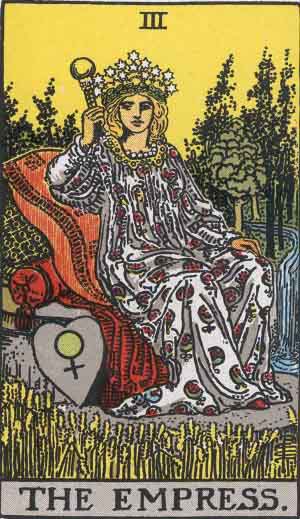
The Empress tarot card

The Empress

Repeated Empress appearances often highlight how nourishment, creation, and embodiment are being handled in the life. The Seeker may be tending others while under-tending themselves, or longing to bring something fertile into form without granting it consistent care. Repetition can point to blocked receiving, strained relationship with pleasure or abundance, or creative life asking for steadier tending. The question is usually what wants to grow and whether the conditions for growth are actually being offered.

The Empress returns when the Seeker is tending everything and everyone except the ground beneath their own feet.

Core Repeating Message

The Empress is seated. That is the first thing to notice. Of all the Major Arcana, she is among the few who are not standing, not walking, not at the edge of something, not in the act of reaching toward or away. She is seated in a landscape that is lush, ripe, abundantly growing, and she is comfortable within it. The wheat grows at her feet. The trees are full. The water flows near. She is not managing this abundance. She is inhabiting it, and the inhabiting is itself the generative act.

She is numbered three. The High Priestess holds inner knowing in stillness. The Magician directs will into the world. The Empress is what happens when inner knowing and directed will meet the conditions of genuine tending: life grows. Growth is not something the Empress forces. She creates conditions and trusts the natural process. She knows that living things have their own timing and that the role of the tender is not to accelerate or control that timing but to ensure that what is trying to grow has what it needs to grow well.

When The Empress appears once in a reading, she marks a moment of creative opening, abundance, nurture, or generative potential. When she returns repeatedly, the message has shifted into something more searching: something in the Seeker’s life that should be growing is being starved, something that should be tended is being neglected, or the Seeker themselves is giving out without replenishing, tending everything around them while their own ground goes unattended.

There are three distinct patterns that bring The Empress back repeatedly, and all of them are expressions of the same fundamental imbalance: a disrupted relationship between giving and receiving, between creative output and generative nourishment, between care extended outward and care directed toward the self.

The over-giver. This Seeker gives generously, consistently, and at significant personal cost. They tend their relationships, their responsibilities, their people, and the needs of their environment with genuine care and genuine skill. They are often valued precisely for this: the person others go to when something needs to be nurtured back to health, when support is needed, when the space requires someone who knows how to make things grow. But what they give to others is rarely turned inward. Their own needs are managed rather than genuinely tended. Their own creative work, their own rest, their own pleasure and nourishment are consistently last on the list, and consistently do not make it onto the list when the list runs out. The Empress returning for this Seeker is not asking them to stop giving. She is asking them to include themselves in the tending. The vessel cannot pour what it does not contain. The garden cannot give what has not been grown.

The creatively starved. This Seeker has genuine creative capacity, the capacity to make, generate, grow, produce something from nothing, that has not been given sufficient conditions to express itself. The creative work may be entirely unlaunched: a practice or project consistently deferred in favour of more immediate obligations. Or it may be present but starved: attempted in stolen fragments of time and inadequate conditions, never given the sustained attention and genuine space it needs to develop into what it could become. The Empress returning for this Seeker is naming this starvation precisely. Creative generativity is not a luxury the Empress represents. It is a fundamental aspect of the vitality she embodies. A Seeker whose creative life is consistently suppressed is not only not making things. They are not fully inhabiting their own life.

The disconnected body. This Seeker has developed a relationship with their physical existence that is primarily managerial. They operate the body: they ensure it is functional, they meet its minimum requirements, they keep it serviceable. But the quality of genuine inhabitation, of being in the body rather than running the body, of experiencing pleasure as a real and nourishing part of life rather than a reward for productivity, has been significantly reduced or lost. The Empress returning for this Seeker is asking about embodiment directly. She is not an archetype of the mind. She is seated in the physical world, surrounded by the sensory abundance of the natural order, and she is at home in it. Her repeated return is asking when the Seeker last felt genuinely at home in their own physical existence.

All three patterns express the same underlying disruption: the Seeker’s relationship with genuine self-nourishment has broken down in some way, and what is not nourished cannot grow, cannot give abundantly, and eventually cannot sustain what it has already built. The Empress does not return as a reproach. She returns as a sustained indication that the conditions for genuine flourishing are not yet present, and that the responsibility for creating those conditions belongs to the Seeker as much as any obligation to others.

What is actually happening in the life of someone who keeps drawing The Empress? Their creative capacity is being consistently starved of time and conditions. Or they are giving to others in the sustained, structural way that leaves nothing for themselves. Or they are living at a distance from their own body, from pleasure, from the sensory richness of physical existence, in ways that have become so normalised that the distance is no longer felt as loss. Often all three are present in different proportions, because they are not independent problems. They are different expressions of the same fundamental thing: a self that is not being tended as carefully as it tends everything around it.


When This Card Repeats Weekly

When The Empress appears repeatedly within a single week, she is pointing at something immediate: a specific act of self-nourishment, creative attention, or physical care that has been deferred, denied, or not even considered as available in the current conditions of the Seeker’s life.

The weekly Empress question is simple and direct: what has your body asked for this week that you have not given it? This might be rest when rest was due and productivity was chosen instead. Nourishment that was genuinely satisfying rather than merely functional. A walk in natural surroundings, time in a garden or a park, contact with the physical world that has been consistently not made. Physical pleasure in whatever form is relevant to the Seeker’s life, that has been treated as something to be earned before it is permitted. The Empress returning across a week is confirmation that whatever specific form this deprivation has taken, it has been noticed. Something is being asked for that is not being given.

In the short term, the Empress’s return also frequently points to a creative impulse that has been suppressed in favour of other priorities. Not a major creative project necessarily, but a specific impulse: the urge to make something, write something, cook something with genuine attention, arrange something beautifully, engage with a creative practice that has been consistently moved to the bottom of the list. The weekly Empress is asking what happened to that impulse. Where did it go? Was it genuinely impossible to follow, or was it deferred in favour of something that felt more legitimate, more productive, more justifiable, without the Seeker ever quite deciding that the creative impulse was not worth following?

Short-term Empress repetition also often marks an acute imbalance in the giving and receiving economy of the Seeker’s immediate life. Something has gone significantly out of balance this week: significantly more flowing out than coming in. The Seeker may not have noticed because the outflow is familiar and the deficit accumulates gradually. The card’s short-term return is an early warning before the deficit becomes depletion.


When This Card Repeats Monthly

When The Empress returns consistently across several weeks, the pattern of self-neglect has become a structure rather than an incident. The Seeker is not having a difficult week in which their own needs are temporarily deprioritised. They are living inside a recurring arrangement in which their own needs are systematically last, and that arrangement has settled in as normal.

The monthly face of over-giving often becomes visible through the body before the mind has named it. The Seeker finds themselves more tired than their workload would seem to justify. A quality of flatness or low-level resentment has begun to colour their experience of the obligations they normally carry without complaint. Small things that would ordinarily be manageable now feel disproportionately heavy. These are not signs of weakness. They are signs of a system that has been running on deficit for long enough that the deficit is now visible in the functioning.

Monthly Empress repetition is also notable when creative work has been consistently absent from the Seeker’s life across the preceding weeks. Not because the Seeker doesn’t want to do it. Not because the creative impulse is absent. But because the month, examined honestly, has not contained any real time for it. The obligations have been real, the priorities have been real, the demands on the Seeker’s time and energy have been real. And in the midst of all of that reality, the creative work, the thing that is genuinely the Seeker’s rather than an obligation to anyone else, has not happened once. The Empress across a month is asking for that absence to be named clearly rather than explained away.

The relationship between the Seeker and their physical environment is also visible at the monthly timescale. The Empress inhabits a place of genuine beauty and careful tending. The Seeker for whom she keeps returning often inhabits spaces that are functional but untended: homes or workspaces that meet minimum requirements but do not reflect genuine care, that do not offer the quality of nourishment to the senses that extended time in them would require. The card appearing monthly is sometimes asking a very practical question: does the physical environment of your daily life support your flourishing? If not, what would it take to change that?


When This Card Repeats Seasonally

Across three to four months, The Empress’s sustained presence signals something operating at a deeper level of the Seeker’s creative and nurturing life: a significant phase of creative gestation that is not being given the conditions it needs, or a season of necessary fallow that is being resisted because rest without visible productivity is not something the Seeker has learned to value or permit.

The concept of fallow is worth dwelling with specifically. In the natural cycles that The Empress embodies, fallow is not the absence of growth but one of its essential stages. The field that rests is not failing. It is building the reserves that will make the next season’s growth possible. The Seeker for whom The Empress repeats seasonally is often in a phase that calls for this specific kind of rest: a period of reduced external production, increased inner replenishment, and the patient holding of creative potential while it develops into something that has not yet fully formed. The difficulty is that fallow looks, from the outside and often from the inside, like nothing happening. The culture in which most Seekers live does not have a positive framework for this. Nothing happening is interpreted as failure, as laziness, as a problem to be corrected. The Empress across a season is asking whether the Seeker can develop sufficient trust in natural timing to permit the fallow without forcing premature growth.

Seasonal Empress repetition also frequently marks a period in which something genuinely new is trying to emerge in the Seeker’s creative or generative life. A new body of work. A different way of expressing a long-held capacity. A creative direction that has not yet been tried but which has been present in the interior for some time, waiting for conditions. This emergence cannot be rushed. It cannot be forced into a more convenient timeline. What it requires is exactly what the Empress embodies: a consistent supply of the conditions under which living things can develop at their natural pace. Time, genuine attention, nourishment in whatever form the creative work needs, and the specific form of trust that does not require the outcome to be visible before the conditions are created.

There is also a seasonal dimension to the Seeker’s relationship with abundance as an operating belief. Across several months, the Empress’s return may be asking the Seeker to examine what they genuinely believe about whether there is enough: enough time, enough money, enough creative energy, enough love, enough space in the world for what they want to make and do and be. The scarcity belief, the conviction that the abundance available is insufficient for the Seeker’s genuine needs, is one of the primary things that prevents the Empress’s energy from freely expressing itself. The card appearing seasonally is pointing at that belief and asking whether it reflects the actual conditions of the Seeker’s life, or whether it is an inherited or historically formed belief being applied to a present that no longer warrants it.


When This Card Repeats Across Years

When The Empress has been present across a year or returns across the major chapters of a life, she is pointing to something that has become foundational: a structural pattern in the Seeker’s relationship with nurture, creative expression, embodiment, or abundance that has operated for so long it has ceased to be experienced as a pattern and has become what feels like simply the shape of the Seeker’s life.

The most common long-cycle Empress pattern is the over-giver for whom generosity has become identity. This Seeker has been the nurturer, the sustainer, the one who tends, for so long that the role has fused with the self-concept. They are the person others depend on. The caretaker. The one who holds things together. The practical and emotional centre of their relationships, their family, often their workplace as well. This role is genuine: the giving is real, the care is real, the skill with which they tend others is real. But across years, the cost of the role has also accumulated, and the cost is specific: the Seeker’s own creative work has not been made. Their own needs have not been tended. Their own pleasure has been systematically secondary. Their own garden, to use the Empress’s natural imagery, has gone unattended for years while every other garden in their radius has been carefully cultivated.

What makes this pattern so difficult to change at the long-cycle level is precisely what makes it invisible as a pattern: other people depend on it. The Seeker cannot simply withdraw the nurture they have been providing without consequences that feel, and sometimes genuinely are, significant. The Empress across years is not asking for those consequences to be disregarded. She is asking for a different question to be brought alongside them: at what cost to the Seeker has this arrangement persisted? And is the cost, now named honestly, one that has been genuinely chosen or simply never fully examined?

The maternal wound is a specific long-cycle Empress pattern that takes different forms depending on the Seeker’s experience. The Seeker who received nurture that was controlling rather than genuinely sustaining, whose mother’s care was conditional, possessive, or enacted at the cost of the Seeker’s own independent flourishing, may have grown up with a distorted map of what nurture actually is. Either they replicate the pattern, giving in ways that contain the same controlling elements, not deliberately but because it is the only map they have. Or they develop a fierce resistance to anything that resembles the received nurture, including the forms of self-tending and self-care that would genuinely serve them. Across years, the Empress’s return in this context is asking the Seeker to develop a new relationship with nurture itself, one drawn from something other than what was received in childhood.

The long-cycle Empress also raises the question of creative legacy in the plainest sense: across the years this card has been present, what has been made? Not in productivity terms, but in the terms of the Seeker’s own genuine creative expression. Is there a body of work, however modest, that reflects their genuine generativity? Is there a practice that has been sustained and deepened? Is there something in the world that would not exist if this Seeker had not made it? If the honest answer across years is no, the Empress is asking what has stood in the way of the making, and whether what has stood in the way has been worth the cost.


Life Area Interpretations

Love & Relationships

The Empress repeating in the context of love and relationships most commonly points to a dynamic in which the Seeker is the primary nurturer and is not being nurtured in corresponding ways in return.

This dynamic is often invisible from the inside because it has been established gradually and because the Seeker is genuinely skilled at giving care. They are good at it. They may find genuine satisfaction in it. The relationship feels, in many ways, like it is working, because the Seeker’s contribution to its functioning is so comprehensive that the relationship does function. What is not visible in the functioning is the cost to the Seeker of sustaining it, and the accumulating absence of the specific experience of being genuinely tended by another person rather than always doing the tending.

The Empress returning in this context is not suggesting the relationship is wrong or that the Seeker should stop giving. She is asking what it would mean for the Seeker to also receive, and what prevents full reception. Some Seekers discover, when they examine this honestly, that they have unconsciously structured their relationships so that their own neediness, their own desire to be nurtured, is minimised or made invisible. They are the capable one, the strong one, the one who manages. The need is real but has been made structurally unavailable within the relational dynamic. The Empress’s return is asking whether the Seeker is willing to let it become available.

In romantic relationships specifically, the Empress points toward the sensory and physical dimension of connection. Pleasure, intimacy, the experience of being physically cared for and physically present with another person: these are the Empress’s relational domain. When the card keeps returning in a love context, it is often asking whether this dimension is genuinely present in the Seeker’s romantic life. Whether pleasure is being experienced and not merely facilitated. Whether the body’s experience in intimate relationship is one of genuine aliveness or whether it has become functional and habitual.

The Empress also points to relationships in which the Seeker’s creative expression is being diminished. A partnership in which the Seeker consistently deprioritises their creative work to meet their partner’s needs, in which their generativity is channelled primarily into the sustaining of the relationship rather than into their own expression, or in which their creative impulses are subtly discouraged, is a relationship in Empress imbalance. The card’s return is asking what genuine flourishing, not just functional partnership, would require.


Career & Purpose

In the domain of work and purpose, The Empress repeating points most directly to the creative conditions of the Seeker’s professional life: whether the work allows for genuine creative expression, whether the Seeker’s generativity is being directed toward something that feels genuinely theirs, and whether the professional arrangement sustains rather than depletes.

The Seeker who is the Empress’s over-giver in a professional context is often identifiable by the range and constancy of their contributions to others. They mentor generously. They support colleagues. They hold the emotional climate of their workplace. They make space for other people’s growth and development with skill and genuine care. All of this is real and valuable. But if the question is asked honestly, the Seeker’s own professional development, their own creative work within the field, their own projects and directions and ambitions, are consistently receiving less of their energy than what goes out to others. The professional over-giving is often not even experienced as a cost because it is so thoroughly normalised. The Empress returning in this context is asking the Seeker to look at the allocation honestly and to ask whether it reflects genuine choice or genuine habit.

The creative conditions of professional work are also specifically in The Empress’s domain. The Seeker whose work leaves no room for genuine creative engagement, who operates in conditions of perpetual urgency and task-completion with no space for the more generative and exploratory dimensions of their capacity, may find The Empress returning as a persistent indication that something essential is not being met in the professional context. This is not about wanting work to be a constant creative experience. It is about whether the work, across a sustained period, provides any genuine engagement with the Seeker’s creative capacity. If it does not, the Empress is asking what that sustained absence is costing in vitality, motivation, and the genuine quality of professional contribution.

There is also a specifically Empress-shaped dimension to how some Seekers relate to professional abundance: the difficulty of receiving appropriate recognition and material return for the quality of what they give. The Seeker who consistently undervalues the genuine creativity and care they bring to their work, who gives extensively and receives minimally, who does not advocate for their own professional needs because attending to others’ seems more natural, is in Empress imbalance in the professional domain. The card’s return is asking about the specific ways in which professional giving and professional receiving have come out of alignment.


Money & Stability

The Empress’s presence in the financial domain is almost always pointing at the Seeker’s relationship with abundance as a lived reality rather than a theoretical concept.

The most common pattern is the Seeker who holds an operating belief of scarcity that does not accurately reflect their actual circumstances. They live in conditions of self-imposed austerity not because the resources are genuinely insufficient but because something at the level of belief tells them that having more, spending on themselves, inhabiting the full abundance available to them, is not permitted, not safe, or not deserved. This belief is often below conscious thought: it presents not as a decision but as a felt sense of what is reasonable and what is excessive, where the threshold between reasonable and excessive is calibrated well below what the Seeker’s actual situation would justify.

The over-giver’s financial pattern is specific and worth naming clearly. This Seeker gives money, time, energy, and practical resource with consistent generosity to others and with consistent underinvestment in themselves. They will spend significantly on a gift for a friend but feel acute discomfort spending the same amount on themselves. They will fund others’ needs without hesitation and feel guilt or anxiety when funding their own. The Empress returning in this financial context is asking the Seeker to examine that asymmetry directly: what is the belief that permits generosity toward others while constraining it toward the self?

The physical environment of the Seeker’s life is also a financial Empress question. The home, the workspace, the daily conditions of physical existence: are these places of genuine care and nourishment, or are they adequate and no more? The Empress does not require luxury. She requires tending. A physical environment that has been genuinely attended to, that reflects care and intention toward the life lived inside it, is itself a form of material self-nourishment. The Seeker whose financial pattern includes a systematic underinvestment in the quality of their own physical surroundings is being asked by the Empress whether that underinvestment is genuinely necessary or whether it is another expression of the belief that their own flourishing is less legitimate than others’.


Spiritual Growth

The Empress is the archetype of what might be called sacred embodiment: the recognition that the physical world, the body, the natural cycles of growth and rest and generation, are not obstacles to spiritual life but its very ground. When The Empress keeps returning in the context of spiritual development, she is most often pointing at a spiritual life that has become overly mental, overly effortful, or disconnected from the physical and sensory dimensions of existence in which she is at home.

The spiritual tradition many Seekers have inherited, or have assembled from their own encounters with various teachings, often carries an implicit hierarchy in which the spirit is elevated above the body, in which pleasure and physical engagement are treated as distractions from genuine spiritual development, in which the goal of practice is increasingly to transcend the physical rather than to inhabit it more fully. The Empress, when she keeps returning, is a direct counter-pressure to that hierarchy. She is not suggesting that the meditative traditions, the contemplative practices, the inner work of the other Arcana are wrong. She is asking whether the spiritual life has become so oriented toward the non-physical that the sacred dimension of the physical has been left behind.

The spiritual practice of genuine pleasure, of full sensory engagement with the beauty and richness of the physical world, of inhabiting the body as a site of sacred experience rather than managing it as a temporary vehicle, is among the most consistently neglected practices in the Seekers who draw The Empress repeatedly. Not neglected as a formal practice but neglected as a lived orientation. The walk in the natural world that is taken with genuine attention rather than as exercise. The meal that is eaten with sensory presence rather than as fuel. The physical environment tended and made beautiful because beauty is itself nourishing to the spirit. These are Empress spiritual practices. They are not lesser than sitting practice or study or inner work. They are the ground beneath those practices.

Creativity as spiritual act is also specifically in The Empress’s domain. The generative impulse, the making of something that was not there before, the tending of something living, whether that is a garden, a creative practice, a relationship, a community, is itself a form of participation in the creative ground of existence. The Seeker whose spiritual life does not include any form of creative engagement is missing something the Empress represents: the specific spiritual experience of making, of calling something into form through one’s own generative presence.

Nature as a spiritual resource deserves specific attention because it is both the most immediately available and the most consistently underused. The Empress is always depicted in natural surroundings. The natural world is not the backdrop to her spiritual life. It is the medium of it. The Seeker who is spending most of their waking hours in built environments, looking at screens, engaged with the human world and its demands, is consistently unavailable to the specific form of spiritual nourishment that only the natural world provides. The Empress’s repeated return is asking for some of that unavailability to be addressed directly.


Emotional & Mental Patterns

The emotional landscape of persistent Empress energy has a characteristic profile that is important to recognise because several of its most significant features present as virtues rather than patterns.

The over-giver’s emotional pattern is not one of obvious distress. This Seeker appears, and often genuinely is, generous, caring, competent, and stable. The emotional cost of their pattern is quiet and accumulates slowly: a quality of flatness that descends gradually after sustained outflow without corresponding inflow, a mild resentment that lives just beneath the warmth, a tiredness that is not about workload so much as about the specific form of emotional labour that giving without receiving represents. The Seeker may not name this as a problem because they have learned to identify with the giving role so thoroughly that feeling resentful about it produces its own guilt.

The inner critic that lives in The Empress’s shadow is worth naming specifically, because it is often the most direct and powerful obstacle to the self-nourishment the card is asking for. This is not the Magician’s impostor, which doubts capability. It is the voice that says that self-care is indulgent, that creative time is a luxury that hasn’t been earned, that rest is laziness, that the Seeker’s own needs taking up space in the day is somehow taking something from others who need it more. This voice presents as responsible and realistic. It is neither. It is a learned position, usually absorbed from a family or cultural system that valued self-sacrifice, and it actively prevents the Seeker from inhabiting the Empress’s genuine wisdom.

Perfectionism in creative work is another Empress emotional pattern that is worth examining specifically. The Seeker who cannot begin the creative work because it needs to be better than they can currently make, or who abandons what they have made before it is complete because it has not met an impossibly high standard, is not experiencing a creative problem. They are experiencing the emotional problem of a creative impulse that has been placed in contact with a standard of perfection that the Empress’s natural creative generativity cannot survive. The Empress does not produce perfection. She produces abundance. The apple is not perfect, but there are many of them, and they are real and nourishing.

The scarcity mindset’s emotional texture is also worth examining: the specific quality of anxiety and constriction that characterises the belief that there is not enough. Not the temporary anxiety of genuinely limited circumstances, but the chronic background orientation toward insufficiency that colours the Seeker’s experience of their life regardless of the actual conditions. This is an Empress emotional pattern because it is in direct opposition to what the Empress embodies, and its persistence is both an indication that the pattern is active and a signal of what the card’s repetition is specifically addressing.


Family & Generational Dynamics

The Empress’s presence in the context of family and generational patterns almost always points toward the maternal, in the broadest sense of that word: what was modelled about nurture, about self-tending, about the relationship between giving and receiving, about whose needs were considered legitimate and whose were not.

The most direct family pattern associated with Empress repetition is the family in which self-sacrifice was a held value, in which the adults in the Seeker’s early life consistently modelled the prioritisation of others at the expense of themselves, in which need expressed by the adults was treated as a weakness or an imposition, in which the family’s wellbeing was purchased by the consistent self-diminishment of the person who was doing most of the tending. The Seeker who grew up watching this absorbs the message not only that self-sacrifice is admirable but that it is what love looks like. The adult version of this learning is the over-giving pattern: giving as the primary language of love, with the cost of giving treated as its legitimising feature.

The maternal wound is a specific dimension of Empress family work that takes many forms. The mother who could not give genuine nurture because she herself had not received it, who gave in ways that were controlling or conditional, whose care was experienced more as management than as warmth, or who was absent in ways that left the Seeker without a model for what genuine sustaining felt like: all of these create a particular kind of disruption in the Seeker’s relationship with nurture itself. The adult who carries this wound may find it difficult to receive care without suspicion, difficult to give care without either controlling its reception or giving until there is nothing left, and difficult to know what genuine self-tending would even feel like because the model of it was absent or distorted.

The Seeker who is now in the position of nurturer within their own family, their own household, their own circle, is also carrying a specific Empress question: what am I modelling for the people I tend? The pattern of self-neglect-disguised-as-virtue is among the most durable patterns human beings pass forward, because it is disguised. It does not look like a wound. It looks like devotion. But what is passed forward is the specific belief that one’s own needs are less important than the needs of those one loves, and that belief will do in the next generation what it has done in this one.


Health & Energy

The Empress is perhaps the most directly embodied archetype in the Major Arcana, and when she keeps returning in the context of physical energy and wellbeing, the message is correspondingly embodied: the body is asking for something it is not receiving, and the Seeker’s physical vitality is connected in direct and practical ways to the quality of genuine self-nourishment available in their daily life.

The depletion of sustained over-giving has a specific physical signature. It is not the tiredness of a difficult period that will resolve when the difficulty passes. It is a more fundamental fatigue, a systemic reduction in available energy that suggests the basic economy of the system has gone out of balance. The Seeker may manage it with caffeine, with willpower, with the specific quality of determination that comes from strong identification with the giving role. But the management is not restoration. The fatigue accumulates beneath the management, and eventually presents in ways that cannot be attributed to workload alone.

The body’s relationship with pleasure and rest is specifically in The Empress’s domain, and the Seeker for whom she keeps appearing is often someone who has developed a relationship with their body that is primarily instrumental rather than genuinely inhabiting. They rest when rest becomes unavoidable. They eat for function rather than genuine nourishment and sensory enjoyment. They do not often experience their body as a source of pleasure, aliveness, or genuine physical delight in existing. This is not a minor deprivation. The experience of genuine physical pleasure, of being genuinely comfortable and at ease in one’s own body, of the specific aliveness that comes from inhabiting physical existence with full presence, is a significant form of nourishment that the Seeker is consistently not receiving.

Nature is a health resource that is specifically The Empress’s recommendation and that is genuinely available to most Seekers in ways they are not taking advantage of. Time spent in natural environments, with genuine attention to the sensory richness of the natural world, has a direct and measurable effect on the quality of the system’s regulation. The Empress returning in the health context is asking the Seeker to take this resource seriously as a practical matter rather than as a nice-to-have that their schedule cannot currently accommodate.

Creative blockage also has a physical signature that is worth naming. The creative impulse that is consistently suppressed does not simply go quiet. It goes somewhere in the body: a tension, a restlessness, a sense of something that wants to move and cannot. The Seeker who has denied their creative expression for an extended period may notice physical qualities of constriction or agitation that are not obviously connected to any specific stressor. The Empress is asking whether those physical experiences might be the body’s way of holding what the creative life has not been permitted to express.


Advanced Interpretive Sections

The Shadow Expression

The Empress’s shadow expressions are particularly well-disguised because they are rooted in what looks like her greatest strength: the capacity to give, to nurture, and to create.

The most recognisable shadow is the smothering nurturer: the person whose giving has become a form of control. This Seeker tends in ways that make others dependent rather than flourishing independently. They give so comprehensively that there is no space within the relationship for the other person’s own agency, difficulty, or growth. The giving is real, but it serves the giver’s need to be needed as much as it serves the receiver’s actual development. The distinction between genuine sustaining and this form of giving is felt by its recipients more often than its perpetrators: the specific discomfort of being loved in a way that does not leave room for one’s own direction.

The indulgent Empress is a shadow in a different direction: the Seeker whose relationship with self-care has tipped from genuine nourishment into avoidance. Rest that has become permanent withdrawal. Comfort-seeking that prevents engagement with the actual demands of the life. The language of self-care used to justify a chronic retreat from what is difficult, uncomfortable, or requiring. The Empress’s genuine self-nourishment enables engagement with the world. The shadow version uses self-nourishment to avoid it.

The creatively blocked Empress who perpetually blames circumstances is a subtler shadow: the Seeker who genuinely wants to create but who maintains a sustained story about why the conditions for creating are never quite right. The time is not available. The space is not sufficient. The obligations are too present. These obstacles are real, and the Empress’s patience is genuine. But when the story about conditions has been running for years without any creative work having been made, the obstacle is no longer circumstantial. It is the story itself.

The bitter over-giver is the most costly shadow expression: the Seeker who continues to give comprehensively while resentment accumulates underneath the giving. The resentment is not expressed because expressing it would require acknowledging the imbalance, and acknowledging the imbalance would require either asking for something different or accepting that the arrangement will not change. Both require a confrontation the Seeker has been avoiding. The giving continues. The bitterness deepens. The Empress in this shadow has become the inverse of what she represents: abundance turned to depletion, generativity turned to exhaustion, warmth turned to a cold obligation being met without the feeling that originally motivated it.


The Integrated Expression

The integrated expression of The Empress is a Seeker who tends themselves as naturally and as generously as they tend others, and from whose genuine self-nourishment a quality of abundant giving then flows that is sustainable rather than depleting.

The distinction between the integrated and shadow expressions of this energy is felt most clearly in the quality of what is given. The Seeker who gives from genuine fullness gives differently than the Seeker who gives from depletion: what flows from genuine abundance is warm and freely given, without the need for acknowledgement, without the resentment that signals an imbalance, without the controlling dimension that appears when giving is also a way of managing one’s own anxiety. The integrated Empress gives because there is genuinely something to give, and the giving genuinely renews rather than depletes because the self-nourishment that makes it possible is consistently in place.

The integrated Seeker has also made peace with fallow: with the seasons of their creative life in which producing is not the work, in which the generativity is turned inward toward preparation, rest, and the specific accumulation that precedes a new season of making. They do not experience the fallow as failure. They have developed sufficient trust in natural timing, in the cycle of growth and rest, to permit each phase its appropriate duration.

The body, for the integrated Empress, is inhabited rather than managed. Physical pleasure, sensory engagement with the world, the experience of genuine comfort and ease within one’s own physical existence: these are not occasional luxuries but consistent features of a daily life that includes them as legitimate and nourishing. The integrated Seeker knows what their body needs and gives it without requiring those needs to be justified as exceptional.

Creative work receives real time and genuine conditions. Not stolen fragments but actual appointments with the creative life, held with the same seriousness as any other commitment. What is made may not be perfect. The Empress’s abundance is not perfect. It is real and nourishing and given freely, and that is entirely sufficient.


Why This Energy Has Not Released Yet

The Empress pattern persists for reasons that are specific and deserve honest examination, because the generalist answers, busyness, obligation, not enough time, while not inaccurate, do not capture what is actually sustaining the pattern.

The most fundamental reason is identity: many Seekers have built their sense of who they are, and much of their relational belonging, around the role of the nurturer. Being the one who tends, the capable one, the generous one, the person others can depend on, is not just a behaviour. It is a self-concept. The prospect of giving less, of attending to their own needs with the same priority as others’, is experienced not as a healthy adjustment but as a threat to the self. If I am not the one who gives in this way, who am I? If I take time for my own creative work, will the relationships that depend on my consistent availability survive it? These are genuine questions, not rationalisations, and they deserve genuine responses. But they also deserve to be named as what they are: questions about identity and belonging, not facts about what is actually required.

The belief that self-nurture is indulgent is another specific and durable reason the pattern persists. This belief is usually not consciously held as a belief. It operates as a felt sense: a subtle but powerful conviction that time spent on the Seeker’s own creative work is time taken from something more important, that attending to their own pleasure and rest is a luxury that their circumstances do not justify, that their needs taking up space in the life is somehow diminishing something or someone else. This belief was almost certainly inherited rather than reasoned. It was absorbed from a family or cultural environment in which it was the operating norm. It can be examined and it can change. But it has to be named as a belief before it can be examined as one.

The creative block’s specific persistence is also worth understanding precisely. The Seeker who is not making things is often protecting against one of two things: the specific vulnerability of making something and having it not be good enough, or the specific responsibility that would arrive if the creative work were made and were genuinely good. Both are real fears. The first is the more recognised: the fear of inadequacy exposed through creative work. The second is less often named: the fear that genuine creative expression, successful and real, would require something of the Seeker, would make visible something about who they are, would create an obligation to continue and to be seen in ways the current creative silence protects against.


What This Card Wants the Seeker to Understand

The Empress wants the Seeker to understand, in the most practical possible terms, that what they give to others can only come from what they have genuinely cultivated in themselves. This is not a metaphor. The nurturer who does not nourish themselves eventually has nothing genuine to give: what flows out becomes increasingly effortful, increasingly tinged with the depletion underneath the generosity, and eventually the giving costs more than it returns to anyone involved, giver or receiver. The most genuinely generous thing available to the Seeker is to attend to their own flourishing with genuine seriousness.

The card also wants the Seeker to understand that growth cannot be forced and that creative work cannot be rushed into existence on demand. The Empress’s wisdom about timing is one of her most important teachings: things grow when they are ready, and the tender’s job is not to accelerate the timing but to ensure that the conditions for growth are consistently present. The Seeker who is anxious about creative output, who measures their creative life by what has been produced rather than by the quality of the conditions being maintained, is trying to do the Empress’s work in a way that the Empress does not work. Tend the ground. Trust the timing. This is not passivity. It is the specific discipline of working with living things rather than against them.

The Empress also wants the Seeker to understand that receiving is not taking. This is perhaps her most countercultural teaching in a context that consistently values giving over receiving, output over nourishment, generosity toward others over care of the self. Being genuinely tended, experiencing physical pleasure and sensory richness, inhabiting abundance rather than perpetually declining it: none of these things deprive anyone else. They create the conditions under which the Seeker is more genuinely present, more genuinely generous, more genuinely alive in ways that benefit everyone they touch.


Signs the Pattern Is Beginning to Resolve

The resolution of persistent Empress energy tends to announce itself first in small, domestic, and embodied ways, because this is where the Empress lives.

One of the earliest signs is the Seeker beginning to include themselves in their own care without requiring a justification for it. They rest before they are forced to by depletion. They eat something genuinely nourishing and take a moment to actually taste it. They decline something they would previously have agreed to from obligation, and they do so without the guilt that previously made declining feel impossible. These are small acts and they have a specific quality: they are done not as corrections to a crisis but as a matter of course, as though the Seeker’s own care is simply part of the natural order of things. That quality, of self-nourishment as unremarkable rather than exceptional, is one of the clearest signs of genuine Empress integration.

Creative work beginning to receive real conditions is another visible sign. Not perfect conditions, not the ideal circumstances the Seeker has been waiting for, but actual time, actual appointments kept with the creative practice, actual things being made. The work may be modest. The practice may be in its early stages. What matters is that it is real, that it is being given real space, and that it is no longer the perpetual next thing that will begin once everything else is attended to.

The Seeker’s ability to receive also shifts in visible ways. They can accept a compliment without deflecting it immediately. They can let someone care for them without immediately turning the attention back toward the other person. They can be on the receiving end of generosity and inhabit that position with genuine openness rather than discomfort. This shift in the capacity to receive is among the most significant indicators of Empress resolution, because it indicates that the fundamental belief about the legitimacy of the Seeker’s own needs has begun to change.

In relationships where the over-giving pattern has been the structure, resolution is visible in a rebalancing that may initially feel uncomfortable for everyone involved. The Seeker begins asking for things. They begin declining some of what was previously given automatically. Other people have to adjust to a version of the Seeker who is no longer the all-providing centre of the relational arrangement. This adjustment is the resolution working itself into reality. The discomfort of the adjustment is not a sign that the resolution is wrong.


Reflective Questions

  1. What specific act of genuine self-nourishment have you consistently deferred this week, this month, and across the past year? What has the deferral cost?

  2. If you examine the actual allocation of your time and energy honestly, what proportion goes toward your own creative work, your own rest, your own flourishing? What does that proportion tell you?

  3. What do you believe would happen to your relationships if you began giving to yourself with the same generosity and consistency with which you give to others?

  4. Where did you learn that self-care is indulgent and self-sacrifice is virtuous? Is the source of that learning still an authority worth deferring to?

  5. What creative work has been consistently present in your interior, waiting for conditions that have not yet been created? What would it take to create those conditions now, with what is actually available?

  6. Is there a relationship in your life in which the giving and receiving are genuinely mutual? If so, what makes mutuality possible there? If not, what is the cost of that absence?

  7. When did you last experience genuine physical pleasure, sensory richness, or the specific aliveness of being fully present in your own body? What prevents that experience from being more regular?

  8. What are you trying to force that might grow better if you created the conditions and trusted the timing?

  9. What was modelled in your family of origin about self-tending and self-nourishment? Is that model one you have chosen, or one you have simply continued without examining?

  10. If you tended yourself with the same skill and attentiveness you bring to the things and people you care for most, what would your daily life look like?


Practical Integration Actions

The Empress’s practical work is less about dramatic restructuring and more about the consistent, small, daily acts of tending that, accumulated over time, genuinely shift the relationship between the Seeker and their own flourishing.

Begin one daily act of genuine self-nourishment and do not justify it. Not a grand gesture. Something small and real: five minutes in the garden, a cup of tea drunk without simultaneously doing something else, a short walk taken with actual attention to the sensory experience of it. The point is not the specific act but the consistent claiming of it: the daily confirmation that the Seeker’s own nourishment is a legitimate part of the day, not a reward for productivity and not contingent on everything else being attended to first.

Create one genuine appointment with your creative work and keep it. Not a vague intention to find time. A specific time, on a specific day, in a specific space. Treat it with the same reliability you treat appointments that exist for other people’s benefit. What is made in that time is less important than the fact of the appointment being kept. The creative practice is built through consistent showing up, not through inspired occasional bursts.

Examine the over-giving and identify one specific area where you can reduce output without catastrophic consequence. This does not mean withdrawing care from those who genuinely need it. It means identifying one area in which you give primarily from habit or from the difficulty of saying no rather than from genuine choice, and reducing or renegotiating your contribution there. The space this creates will be informative: notice what becomes possible when the energy previously going in that direction is available for something else.

Practise receiving once this week without deflecting. When someone offers care, a compliment, practical help, or attention, receive it. Do not immediately redirect the focus back to them. Do not minimise what is being offered. Do not immediately reciprocate in order to restore the familiar dynamic of you being the giver. Simply receive, and notice what that experience is like.

Spend time in natural surroundings with genuine sensory attention. Not exercise, not fresh air for health purposes, but a deliberate engagement with the natural world as a nourishing environment. Notice what is growing. Notice light and texture and sound. Let the experience be an end in itself. The Empress lives in this experience. It is one of the most direct ways of accessing her energy.

Audit the physical conditions of your daily life. Look honestly at your home, your workspace, the environment in which you spend most of your time. Is it tended? Does it reflect care for the person who lives and works in it? Does it offer any genuine sensory nourishment? Identify one small, specific change that would improve the quality of your daily physical environment and make it. Not a renovation. Something achievable and real.

Examine your relationship with food as a form of nourishment. Not nutritionally, but experientially. When did you last eat something with full sensory attention, with genuine pleasure, without simultaneously managing something else? Choose one meal this week to be fully present for: prepared with some care, eaten without distraction, tasted rather than consumed. Notice what that experience is like and what it indicates about the usual quality of your relationship with one of the most basic forms of physical nourishment.

If resentment is present in your giving, name it. Write it down in a private space. Not to act on immediately but to acknowledge. Resentment that is not named does not resolve. It accumulates and eventually contaminates the giving it lives beneath. Naming it accurately, seeing precisely where it comes from and what it is asking for, is the beginning of the honest renegotiation that allows the giving to become genuinely generous again rather than a sustained obligation performed under the surface of something that is no longer warm.

Notice where you are trying to force what would grow better if tended. Identify one situation, project, or relationship in which you are attempting to accelerate an outcome that has its own natural timing. Ask honestly what would change if you shifted from trying to force the outcome to tending the conditions and trusting the pace. The Empress’s wisdom is not passive. Tending is active work. But it is a different kind of active than forcing, and the results it produces are different in kind as well as degree.

About repeating card patterns

When the same tarot card continues appearing across readings, the repetition often points toward something unresolved, unintegrated, re-emerging, or still unfolding beneath the surface of events.

This tool explores what recurring cards may be attempting to stabilise across time: across days, seasons, relationships, transitions, emotional cycles, and longer life patterns.

Rather than treating repeated cards as isolated meanings, the readings examine:

  • what continues returning into awareness
  • where pressure, timing, avoidance, or unfinished movement may exist
  • how the meaning of repetition shifts as the Seeker's circumstances and relationship to the pattern evolve

There is no draw here. The interpretation unfolds from the card already present in your life.

Created by Leigh Spencer for Tides of Knowing, drawing on 40+ years of tarot practice, symbolic interpretation, and The COMPASS MethodTM.

Back to Tarot tools

Stay close to the work

Get new articles and early access

This work develops over time. Join the list to stay close to it.

Join the list →