
Tarot interpretation tool

Repeating Card Meanings

Choose the tarot card that keeps appearing to explore what the pattern may be asking you to notice.

Choose a card

For full searchable reference pages, visit the repeating card pattern library.
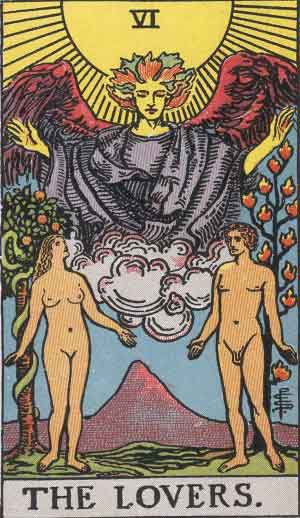
The Lovers tarot card

The Lovers

When The Lovers recur, choice and alignment are usually central. The Seeker may be divided between paths, values, or relational pulls, or repeating patterns of connection that reveal what they truly want versus what they tolerate. Repetition can highlight mirroring, commitment questions, or the cost of staying misaligned for comfort. These periods ask not only who or what is chosen, but whether the choice reflects integrated desire rather than split loyalty.

The Lovers does not return to ask whether you are in love. It returns to ask whether your life is aligned with what you genuinely love.

Core Repeating Message

The Lovers is numbered six. Two figures stand below a radiant angelic presence, arms open, facing outward. Behind one grows a tree of flames. Behind the other grows a tree heavy with fruit and a serpent. The imagery is not incidental: this is the moment after the garden, the moment in which the original innocence has become knowledge and that knowledge requires something. A choice. A genuine, consequential choice made in the sight of something larger than the individuals involved. The divine figure above does not choose for them. It witnesses. What is chosen here matters.

This card is among the most frequently misread in the Major Arcana. Because of its name and its image, it is taken primarily as a card of romance, of partnership, of being in love or being about to be. And those meanings are present. But they are not the deepest or most operative meaning of the card, and they are certainly not the meaning the card is pointing to when it returns again and again to a Seeker’s readings. The Lovers is primarily a card of alignment: of the correspondence between what a person genuinely loves, genuinely values, and genuinely is called toward, and how they are actually living. The relationship between two people is one expression of that alignment question. It is not the only expression, and it is often not the primary one.

What The Lovers asks, in its most fundamental form, is this: what do you genuinely love? And the follow-on: is your life in alignment with that?

These are not simple questions. Genuine love, in the sense the card intends, is not what one is currently excited by, not what one feels obligated toward, not what one has been told to love, not what earns the most approval, and not what is most comfortable. It is the specific draw toward a person, a direction, a way of living, a form of creative or professional expression, a set of values, that carries a quality of authentic calling. The thing that, when genuinely inhabited, produces a sense of being more genuinely oneself than in other contexts. The relationship, the work, the way of being in the world that feels genuinely aligned rather than performed or endured.

When The Lovers appears once in a reading, it marks a moment of genuine choice, genuine attraction, or a significant question about alignment. When it returns repeatedly, the message has deepened into something more searching: the alignment being asked about has not yet been achieved, or has been abandoned, or has never been genuinely identified. The card is not returning to repeat romantic information. It is returning because the question of what the Seeker genuinely loves and whether their life is genuinely aligned with it remains unresolved.

There are three primary patterns that bring The Lovers back repeatedly.

The choice-avoider. This Seeker is at a genuine decision point and is refusing to choose. They may be between two relationships and unable or unwilling to commit to either. They may be between two vocational directions and maintaining the ambiguity because choosing would require closing off the unchosen path. They may be between the life they are currently living and the life that genuinely calls them, and they are managing the tension between these two rather than resolving it. The Lovers returning for this Seeker is naming the avoidance directly: a choice is genuinely available and is not being made. The reasons for not making it are real, and the cost of the avoidance is also real. The card is asking for the choice to be made, not necessarily the dramatic, life-changing kind, but the genuine kind: an honest alignment of decision with genuine values, even when that alignment has cost.

The misaligned chooser. This Seeker is choosing, but consistently from the wrong place: from fear of disapproval, from the desire for safety, from habit, from what is expected by the people whose expectations most powerfully shape them. They are not choosing from genuine love. As a result, their life accumulates a quality of quiet disconnection: not dramatic unhappiness, not obvious suffering, but a persistent sense of something missing, of not quite being in one’s own life, of doing and having what is supposed to be good without the specific aliveness that genuine alignment produces. The Lovers returning for this Seeker is pointing at this pattern of misaligned choosing and asking what it would take to make a genuinely different kind of choice.

The disconnected from genuine love. This Seeker has lost the thread of what they genuinely love. Not dramatically or suddenly but gradually, through the accumulation of obligations, adjustments, and compromises that constitute most adult lives. They once knew what called them. They once had clear enough access to their genuine values to make choices from them. Somewhere across the years of responsible adulthood, that access has narrowed. They operate now from obligation and habit rather than from genuine attraction and genuine values. The Lovers returning for this Seeker is asking a question that sounds simple and is not: what do you actually love? What calls to you genuinely, when the obligations and habits are held aside long enough to hear it?

All three patterns share the same root condition: the Seeker’s relationship with their own genuine values, and with the choices that would reflect those values, has become interrupted, distorted, or lost. The Lovers persists because that interruption has not been addressed.

There is a fourth dimension to The Lovers’ repeated presence that operates at a deeper level of the card’s symbolism: the inner marriage. The figures in the card represent not only external relationship but also the integration of opposites within the Seeker’s own psyche. The union that The Lovers is pointing toward is not only the union between two people. It is the union between aspects of the self that have been held in opposition: instinct and reason, heart and mind, the spiritual and the material, the side of the self that reaches for freedom and the side that reaches for belonging. When The Lovers keeps returning, it sometimes points not at an external choice or an external relationship but at a profound split within the Seeker’s interior: a civil war between parts of themselves that has never been resolved into genuine integration. The marriage that is needed is internal, and the card returns until it begins to be made.

What is actually happening in the life of someone who keeps drawing The Lovers? They are avoiding a genuine choice, or they are consistently choosing from fear or approval rather than from genuine values, or they have lost genuine contact with what they love, or they are living from one side of an internal opposition rather than from the genuine integration of both. Often more than one of these is true simultaneously, because they are not separate problems. They are different expressions of the same underlying disruption: the Seeker’s life is not in genuine alignment with what they genuinely love.


When This Card Repeats Weekly

When The Lovers appears repeatedly within a single week, it is pointing at something present and specific: a choice point, a relational moment, or a values question that is active in the current circumstances and that has not yet been genuinely engaged.

The most common short-term presentation is a decision being made from the wrong place. The Seeker is at a choice point and is selecting the option that feels safest, that earns the most approval, that requires the least disruption to existing arrangements, rather than the option that genuinely aligns with what they value. The Lovers returning across the week is not telling them which choice to make. It is asking them to examine the source from which the decision is being made. Is this choice coming from genuine values, or from fear? From genuine attraction, or from the path of least resistance?

Short-term Lovers repetition also frequently arrives in relational contexts that require genuine presence rather than managed distance. Something in the week’s relational life is asking the Seeker to show up as they actually are, with their actual feelings and genuine position, rather than performing the version of themselves that the relationship’s established dynamic expects. The Lovers is asking for genuine encounter rather than managed surface.

The specific question of what the Seeker genuinely loves also surfaces in the short term as a kind of felt absence: a situation in the current week that would be genuinely enlivening if the Seeker were aligned with what they love, and that instead feels flat, effortful, or disconnected. The Lovers returning across the week is sometimes simply pointing at that flatness and asking what it indicates about the alignment between the current circumstances and the Seeker’s genuine values.


When This Card Repeats Monthly

When The Lovers returns consistently across several weeks, a pattern of misalignment has become visible across the accumulation of daily choices. The Seeker can look back across the month and observe, if they look honestly, the shape of a recurring dynamic: they are consistently choosing something other than what they genuinely love, or they are consistently avoiding the genuine choice that is available to them, or the relationship or direction they are in is consistently not producing the sense of aliveness that genuine alignment would generate.

The monthly accumulation of small misaligned choices is among the most important things The Lovers is pointing to at this timescale. Individual misaligned choices often seem reasonable in context: the obligation accepted from habit, the vocational direction continued from inertia, the relationship sustained from comfort. But accumulated across a month, the pattern of consistently not choosing from genuine values produces a specific quality of emotional flatness and disconnection that is now beginning to be visible as a pattern rather than a series of individual reasonable accommodations.

The gap between stated values and actual choices is most clearly visible at the monthly timescale. The Seeker who says they value genuine creative expression but who has not made a single choice in the past month that prioritised it. The Seeker who says the relationship matters most but whose actual choices across the month have consistently deprioritised genuine relational presence in favour of easier avoidances. The Lovers across several weeks is asking the Seeker to look honestly at what the accumulated choices of the past month actually indicate about genuine values, as distinct from stated ones.

There is also a monthly dimension to the inner integration work. Across several weeks, the Seeker may be able to observe the specific ways in which two aspects of themselves are in conflict: the practical and the creative, the dutiful and the free, the emotionally present and the intellectually detached. The Lovers returning monthly in this context is pointing at the specific internal tension and asking whether any genuine movement toward integration has occurred, or whether the two sides are still operating in mutual suppression.


When This Card Repeats Seasonally

Across three to four months, The Lovers’ sustained presence signals that a significant choice point has been forming and is now approaching its moment of genuine decision. Something that has been held in suspension, maintained as ambivalence, or managed as perpetual optionality, is reaching the natural limit of how long it can be deferred without cost.

Seasonal repetition of The Lovers often marks a period of genuine values clarification: the specific internal work of sorting what the Seeker actually loves and values from what they have been told to love and value, what genuinely calls from what has been followed from obligation, what is genuinely theirs from what has been performing for approval. This is not a comfortable process. The received values and the genuine values are rarely entirely separate: they are tangled together in ways that make clean distinction difficult. But across a season, the Seeker’s inner work is producing increasing clarity about where the genuine values lie, and that clarity is making the specific nature of the misalignment more visible.

Seasonal Lovers repetition frequently involves a significant relationship being assessed, consciously or not, for genuine alignment. A long partnership is being looked at from the inside with a question that may not yet have been spoken: is this genuinely aligned with who I am and who I am becoming? Is this the choice I would genuinely make now if I were choosing from genuine values rather than from the structure that has been built? These are not questions that require immediate dramatic action. But they are questions that, once they have genuinely surfaced, cannot be sustainably suppressed. The Lovers across a season is confirming that the question is genuine and deserves genuine engagement rather than management.

The seasonal timescale is also when the internal integration work of The Lovers becomes most visible as process. The Seeker may be able to identify, across three or four months, the specific pair of opposites that is most in tension within them, and the ways in which the tension is expressing itself in external choices and relationships. The Lovers’ seasonal return is pointing at that specific inner divide and asking whether any genuine movement toward integration has begun.


When This Card Repeats Across Years

When The Lovers has been present across a year or returns across the major chapters of a life, it is pointing to something that has become foundational: the Seeker’s long-term relationship with genuine alignment, with the question of whether the life they are living genuinely reflects what they love.

The most significant long-cycle Lovers pattern is the life that is good on paper but not genuinely lived from genuine love. The Seeker has the relationships, the professional position, the circumstances that they were supposed to want, that the relevant people in their life would describe as a good life. But from the inside, there is a persistent and specific quality of disconnection: the sense of living adjacent to one’s own life rather than inside it, of inhabiting a version of oneself that is assembled from approved choices rather than genuine values. The Lovers across years is naming this disconnection with increasing insistence: something essential to the Seeker’s genuine self has been consistently not chosen, and the accumulated cost of that non-choosing is now significant.

The choice that has been avoided for years is a specific long-cycle Lovers pattern. The Seeker has been at a genuine decision point, or between two genuine directions, for an extended period. They have maintained the ambivalence because the cost of choosing either direction has felt too high, or because choosing would require genuinely mourning the unchosen path, or because the choice would disrupt relationships or structures that many people depend on. Across years, the maintenance of the ambivalence has its own cost: neither direction has been given the genuine commitment that would allow it to deepen, and the Seeker has been living in the in-between space rather than choosing a genuine place to stand.

The soul curriculum of long-cycle Lovers energy is the development of genuine values-based choosing: the capacity to identify what one genuinely loves and values, to make choices that reflect those genuine values, and to grieve the unchosen paths with enough genuine acceptance that the choices made can be fully inhabited. This is more demanding than it sounds. Genuine values-based choosing requires genuine knowledge of one’s own values, genuine courage to choose them in the face of disapproval or cost, and genuine willingness to accept the loss that every genuine choice inevitably involves.

The inner marriage work across a lifetime is also a significant long-cycle Lovers pattern. The Seeker who has been living from one side of an internal opposition for years, consistently suppressing the other side in the service of a particular identity or social role, is being called across the long arc of the life to bring the suppressed aspect into genuine integration. The artist who has suppressed the practical. The intellectual who has suppressed the emotional. The dutiful who has suppressed the free. The spiritual who has suppressed the instinctual. These suppressions have a cost that compounds over years, and The Lovers returning across a lifetime is asking for the integration that the suppression has been preventing.


Life Area Interpretations

Love & Relationships

The Lovers repeating in the domain of romantic relationship and intimate partnership is addressing several distinct questions, and it matters which one is most operative for the specific Seeker.

The most direct question is whether the relationship the Seeker is in is genuinely chosen. Not in the sense of having once decided to enter it, which almost all relationships involve, but in the deeper sense of genuinely reflecting the Seeker’s authentic values and genuine self. There is a significant difference between a relationship that has been built over time and that genuinely reflects who both people are, and a relationship that has been continued from habit, from the structure that has been built around it, from the cost of leaving, from the genuine care that exists without the genuine alignment. The Lovers returning in a relational context is asking the Seeker to look at their partnership honestly from this angle: not is this a good relationship in the objective sense, but is this the relationship that genuinely calls me?

For the Seeker who is between two relationships, or between the relationship they are in and the one that is calling them, The Lovers’ return is pointing at the specific unresolvedness of the situation. The two-directional pull is real, and the card is not romanticising it. What it is asking for is genuine choice: the specific courage to choose genuinely rather than to continue managing the ambivalence in ways that are fair to no one involved, including the Seeker.

The question of what genuine love actually feels like in the body and in the daily experience of a partnership is one The Lovers is consistently asking. Relationships that are sustained by obligation, by the structure that has been built, by genuine care without genuine resonance, have a specific quality that is distinguishable from the quality of a relationship that is genuinely aligned with both people’s genuine selves. The Lovers does not require that every moment of a relationship feel romantic or intensely connected. It does ask whether, across the experience of the relationship as a whole, there is genuine resonance, genuine recognition, genuine mutual calling toward the other person’s actual self.

The internal integration dimension of The Lovers is also present in romantic partnership. The Seeker who has suppressed certain aspects of themselves to sustain a relationship is in a form of inner Lovers imbalance that will eventually surface: the suppressed aspects do not remain suppressed indefinitely. They emerge as dissatisfaction, as attraction to what is missing, as resentment, or as the specific restlessness of someone whose genuine self is not being fully expressed within the relational container.


Career & Purpose

In the domain of career and purpose, The Lovers’ repeated presence is asking the fundamental question of alignment between what the Seeker genuinely loves doing and what they are actually doing with their professional life.

The most direct pattern is the Seeker who knows what genuinely calls them vocationally and is not doing it, or is not doing it enough to constitute a genuine choice in its favour. They may be doing the responsible thing, the financially secure thing, the thing that earns approval from the relevant people in their life. But the genuine vocational attraction, the work that feels genuinely alive when they are in it, is either absent from their professional life entirely or present only as a marginal activity given insufficient time and genuine commitment. The Lovers returning in this career context is naming the specific misalignment: the Seeker is not choosing from genuine love in the professional domain.

The choice between two vocational directions is a specific career expression of The Lovers’ repeated appearance. The Seeker who is between two professional paths, neither of which they are fully committing to because committing would mean genuinely closing off the other, is in the card’s primary territory. The ambivalence may have been sustained for a long time. Each individual reason for not choosing is probably reasonable. Accumulated, they form a pattern of professional perpetual optionality that is preventing any genuine vocational depth from developing.

The creative or professional partnership is also in The Lovers’ domain. A collaboration, a working relationship with a colleague or employer, a professional community in which the Seeker participates: these partnerships have the same alignment question as romantic ones. Is this genuinely calling? Is the work being done together genuinely aligned with both people’s genuine values and genuine direction? Or has the partnership been sustained from habit, from the structure built around it, from the cost of changing it?

There is also a Lovers dimension to the Seeker’s relationship with their own genuine professional authority: the permission to do the work they genuinely love and to claim it as legitimate work rather than as a luxury or an indulgence. The Seeker who cannot claim genuine vocational love as a valid basis for professional decision is the Seeker for whom The Lovers’ return in the career domain is most directly pointing at the permission question: who told you that what you genuinely love doing is not a legitimate basis for how you spend your professional life?


Money & Stability

In the domain of money, The Lovers is asking about the correspondence between the Seeker’s genuine values and their actual financial choices: where money goes, what it is withheld from, and whether the financial structure of the Seeker’s life reflects genuine priorities or inherited and habitual ones.

The most common Lovers financial pattern is the sustained trade of genuine alignment for financial security, where the trade has been made so gradually and so long ago that it is no longer experienced as a trade. The Seeker is in work they do not love because it pays reliably. They are in a lifestyle they do not genuinely value because it was built around financial security as the primary organising principle. They have arranged their financial life in service of safety in ways that have progressively closed off access to what they genuinely value. The Lovers returning in this context is not suggesting that financial security is unimportant. It is asking whether the specific trade being made is genuinely chosen or whether it has become the default that was never actually questioned.

The financial choices that reflect genuine values are also in The Lovers’ domain. Where the Seeker spends money is a visible expression of actual values, often more honest than stated ones. The Seeker who says they value creative expression but who never spends money on creative materials, classes, or experiences is making a financial statement about their genuine priorities that contradicts the stated value. The Lovers returning in a financial context is sometimes asking the Seeker to look honestly at where money actually goes, as a way of understanding what is genuinely valued in practice rather than in principle.

The question of financial alignment with a partner is also live in this domain. Shared financial life in a partnership is one of the most revealing expressions of values alignment or misalignment: what is prioritised, what is deprioritised, what is fought about, what is agreed on without discussion, all of it expresses both people’s genuine values in concrete and unavoidable ways. The Lovers returning in the financial domain for someone in a significant partnership is often pointing at a values misalignment that is expressing itself most visibly in the financial dimension of the shared life.


Spiritual Growth

The Lovers is, at its deepest level, a spiritual card: it describes the moment in which genuine values are expressed in genuine choice, witnessed by something larger than the individual, with genuine consequence. When it keeps returning in the context of spiritual life, it is most often asking about two things: the genuine love that is or is not present in the Seeker’s relationship with the sacred, and the inner integration that is the specific spiritual work of this archetype.

Genuine love for the sacred, as distinct from dutiful engagement with spiritual practice, has a specific quality that the Seeker for whom The Lovers keeps returning may have lost access to, or may never have found. Spiritual life practised from obligation, from the habit of practice established in earlier years, from the social context of a spiritual community, from the desire to be a particular kind of person, does not carry the specific aliveness that genuine spiritual love produces. The Lovers returning in spiritual readings is asking whether the Seeker’s relationship with the sacred is one of genuine attraction, genuine calling, genuine love in the deepest sense, or whether it has become a form of spiritual maintenance that has lost its genuine centre.

The inner marriage is the most specifically spiritual dimension of The Lovers’ repeated presence. The figure above in the card’s traditional imagery oversees the union of two beings who are not identical. Their differences are real. What is happening in the card’s image is not the erasure of those differences but the genuine meeting of two distinct presences in the sight of something larger than either. The inner version of this is the genuine integration of aspects of the Seeker’s own psyche that have been held in opposition: the rational and the intuitive, the active and the receptive, the worldly and the spiritual, the self that belongs to others and the self that belongs only to itself. The Lovers keeps returning because this inner marriage has not yet been made.

The specific spiritual work of inner integration is neither the suppression of one side nor the romantic idealisation of their union. It is the genuine practice of allowing both aspects genuine expression, genuine space, and genuine voice, and of developing the capacity to hold both simultaneously rather than alternating between them or choosing one as the legitimate self and exiling the other. This is long work. It is the specific spiritual curriculum that The Lovers’ sustained presence names.


Emotional & Mental Patterns

The emotional landscape of persistent Lovers energy is shaped almost entirely by the specific quality of unresolved choice: the emotional texture of a life that has not been genuinely chosen from genuine values.

The most pervasive emotional pattern is a particular quality of flatness that is not depression but resembles it: the specific absence of genuine aliveness that accompanies living out of alignment with one’s genuine values. The Seeker is not in obvious suffering. They function. They manage their obligations. They have relationships and work and the surface structure of a life. But the specific quality of aliveness, of genuine engagement, of the felt sense of being in one’s own life rather than a version of it assembled from approved components, is consistently low or absent. This flatness is the Lovers’ most reliable emotional signal.

Ambivalence as a sustained emotional state has a specific cost that is worth naming directly. The Seeker who lives in genuine two-mindedness about a significant choice, a relationship, a direction, is expending continuous emotional energy on the maintenance of the ambivalence: holding both positions active simultaneously, processing the pros and cons repeatedly, managing the anxiety of not choosing. This expenditure does not produce anything. It simply sustains the ambivalence. Over time it produces a specific exhaustion that is proportional to the significance of the unresolved choice and the duration of its unresolvedness.

The mental pattern most associated with Lovers repetition is the perpetual weighing of options without resolution: the pros-and-cons list that never completes, the analysis that always finds one more consideration, the thinking that visits the same territory repeatedly without producing a different outcome. This is not a failure of intelligence. It is a failure of genuine choosing: the mind is being asked to resolve something that can only be resolved by the will, which requires genuine contact with genuine values, and the mind cannot substitute for that contact by thinking harder.

The emotional recognition of genuine alignment deserves specific attention, because the Seeker who has been living out of alignment for a significant period may have lost the felt sense of what alignment actually feels like. The specific quality of aliveness, of ease, of genuine engagement that genuine alignment produces is not dramatic. It is not necessarily intense or exciting. It has a quality of rightness that is quieter and more solid than excitement. The Lovers’ return is partly asking the Seeker to remember or rediscover that quality: to notice what produces it in their actual experience, so that genuine alignment can be distinguished from comfortable habit or managed approval.


Family & Generational Dynamics

In family and generational contexts, The Lovers most often points to the degree to which the Seeker’s choices have been shaped by family expectations, prescriptions, and the specific form of love that carries approval as its condition.

Every family transmits beliefs about what choices are legitimate, which partners are appropriate, which vocations are acceptable, which ways of living are valid and which are departures from what the family considers correct. These transmitted beliefs are not necessarily explicitly stated. They are expressed through the specific quality of welcome or unwelcome that different kinds of choices receive within the family system: the subtle or not-so-subtle signals about what earns belonging and what risks it. The Seeker who has been making choices significantly shaped by these signals may have developed a sophisticated ability to navigate family approval without ever genuinely examining which of their choices are actually their own.

The parent whose love has been significantly conditional on the child’s choices is a specific and important family dimension of The Lovers’ repeated presence. The Seeker who learned early that certain choices would produce a withdrawal of parental warmth and approval, and that other choices would sustain it, has often built a choosing apparatus that is oriented more toward maintaining approval than toward genuine values. The adult version of this mechanism is the Seeker who cannot make a significant choice without first, consciously or not, running it through the filter of parental response. The Lovers returning for this Seeker is asking when the choosing will begin to come from their own genuine values rather than from the management of parental approval, whether the parent is still living or has become an internalised voice.

The generational pattern of choosing safety over genuine love is also a Lovers family theme. Many family systems transmit the specific belief that choosing from genuine love is irresponsible, romantic, impractical, or a luxury that ordinary people cannot afford. The Seeker raised in such a system may have internalised this as a fundamental fact about the kind of person they are: not the kind of person for whom genuine love is a valid basis for life choices, but the kind of person who makes the responsible choice and manages the rest. The Lovers’ return is a direct challenge to that self-concept and to the family belief system that produced it.


Health & Energy

When The Lovers keeps returning in the context of physical energy and wellbeing, the connection is direct and important: the specific quality of vitality available to a person who is genuinely aligned with what they love is categorically different from what is available to someone living out of alignment, and the difference is physically felt.

The specific flatness of the life lived out of alignment with genuine values has a physical signature. The Seeker may have adequate energy for the obligations and structures of their life. What is absent is the particular quality of enlivening that comes from doing what one genuinely loves, from being in relationship with what genuinely calls, from choosing in accordance with genuine values. This absence is not always identified as a health issue because the Seeker is functional. But it is a genuine form of physical depletion: the system is being asked to operate without the specific energetic resource that genuine alignment and genuine love provide.

The body is among the most reliable guides available to the Seeker for The Lovers’ primary question. The specific physical quality of genuine alignment, that felt sense of rightness and ease and aliveness that accompanies a genuinely aligned choice or genuinely aligned relationship, is real and consistent enough to be a genuine navigational instrument. Similarly, the physical quality of genuine misalignment, the specific quality of constriction, flatness, effort without engagement, or the subtle wrongness that the body registers before the mind has formulated it as thought, is equally real and equally consistent.

The Seeker who has been living out of alignment for a significant period may have developed such a habit of ignoring the body’s alignment signals that they are no longer easily available. Recovering access to them often involves the practices of genuine stillness and genuine sensory attention: the creation of conditions in which the body’s quieter signals can be heard above the noise of obligation, management, and performance. The Lovers returning in a health context is often specifically pointing toward the body as the instrument of alignment guidance that has not yet been genuinely consulted.


Advanced Interpretive Sections

The Shadow Expression

The Lovers’ shadow expressions all share a common feature: the substitution of something else for genuine values-based choosing.

The perpetual ambivalent is the most recognisable shadow: the Seeker who keeps all options open indefinitely, who maintains genuine investment in multiple directions or multiple relationships simultaneously, who cannot make the genuine choice because choosing genuinely means losing the unchosen path, and that loss is not something they are willing to accept. The ambivalence presents as thoughtfulness, as complexity, as the responsible consideration of all factors. It is functionally the refusal of the specific loss that genuine choice always involves, sustained indefinitely at the cost of genuine commitment to anything.

The infatuated is a different shadow: the Seeker who mistakes intensity of feeling for genuine alignment, who follows what is most exciting rather than what is genuinely values-aligned, who makes choices based on the most activated emotional state rather than the most settled and genuine one. This shadow can look like passion and can genuinely feel like love. What distinguishes it from integrated Lovers energy is the absence of genuine values at its centre: it is driven by emotional intensity rather than by the quiet, solid recognition of genuine calling. Choices made from infatuation tend not to sustain genuine commitment, because the intensity that produced them is not the same as genuine alignment.

The martyr chooser consistently selects what others need or what is expected, at the explicit cost of their own genuine values, and then experiences the suffering of that choice while never examining why they keep making it. This shadow is sustained by the specific moral reward of self-sacrifice: the martyr’s identity provides a form of meaning and of being valued by others that the genuine choice, oriented toward the Seeker’s own values, would not automatically provide. The Lovers in this shadow is not pointing the Seeker toward selfishness. It is asking whether the consistent self-sacrifice is genuinely chosen or whether it is a mechanism for avoiding the specific vulnerability of genuine values-based choosing.


The Integrated Expression

The integrated expression of The Lovers is a Seeker who chooses from genuine values, with genuine awareness of what the choice costs, and inhabits the chosen path without spending the rest of their life in the aftermath of the unchosen ones.

The specific quality of the integrated Lovers chooser is neither impulsive nor agonised. They know their genuine values clearly enough to use them as a genuine guide. They make choices that reflect those values, not always easily or without cost, but genuinely. When the choice has been made, they grieve the unchosen path genuinely rather than pretending the cost is nothing, and then they allow that grieving to complete rather than sustaining it indefinitely as a way of avoiding full commitment to what was chosen.

The integrated Seeker’s relationship with genuine love is settled enough to recognise it: they know what calls them and they are in genuine relationship with it. The relationship, the work, the way of living, the values, are not merely performed but genuinely inhabited. The quality of aliveness that genuine alignment produces is available to them as a consistent feature of their daily experience rather than as an occasional glimpse.

The inner marriage of integrated Lovers energy is not the resolution of all internal opposites into a comfortable synthesis. It is the capacity to hold apparently opposing aspects of the self in genuine dialogue: to allow the practical and the creative, the dutiful and the free, the rational and the intuitive to each be genuinely present without one consistently suppressing the other. This is not a permanent achievement. It is a daily practice, and the integrated Lovers practises it consciously.

The integrated Seeker can also recognise the moment of genuine choice when it arrives and meet it with genuine choosing rather than with avoidance or ambivalence. The divine witness above the card’s figures is not absent in the integrated expression. It is present as the Seeker’s own genuine values, the thing in them that is larger than immediate comfort or approval, and it is genuinely consulted.


Why This Energy Has Not Released Yet

The Lovers pattern persists for reasons that are specific and deserve honest examination, because the experience of the pattern from the inside is often one of genuine complexity rather than simple avoidance.

The fear of the cost of genuine choice is the most fundamental reason the pattern persists. Every genuine choice forecloses something. The Seeker who chooses the genuinely called-toward relationship loses the other relationship. The Seeker who chooses the genuine vocation loses the safer path. The Seeker who chooses from genuine values rather than from approval risks the approval. These losses are real. They are not imaginary, not catastrophised, not the product of anxiety alone. They are the actual cost of genuine choosing. The Lovers pattern persists partly because the Seeker has not found a way to accept the cost of genuine choice: to grieve what is lost genuinely and to remain committed to what was chosen without requiring the lost path to be retroactively worthless.

The belief that genuine alignment is not available is a second specific and important reason. The Seeker who has lived out of alignment for a significant period, or who was raised in an environment where genuine values-based choosing was not modelled as a real option, may have developed a settled conviction that the life genuinely aligned with what they love is simply not available to people like them in circumstances like theirs. It may be available to others, to people with more freedom, more resources, different relationships, different histories. But not to them. The Lovers keeps returning because this belief is not accurate, and the card is pointing directly at it as the primary obstacle to the alignment being asked for.

The approval dependency is a third specific reason. The Seeker who cannot make a significant choice without first securing it against the anticipated responses of the relevant others, whether parents, partners, community, or the internalised versions of all of these, has a choosing process that is oriented outward rather than inward. What would genuinely align with my values is not the first question. What will be acceptable to the people whose approval matters is the first question, and the genuine values question is answered within the constraints that response produces. The Lovers keeps returning because genuine choosing is not available from within that outwardly oriented process.


What This Card Wants the Seeker to Understand

The Lovers wants the Seeker to understand that what they genuinely love is a real and serious guide to how their life should be lived. This is not naive. It is not irresponsible. It is, in fact, the most precise navigational instrument available for the most significant choices: the recognition, clear and honest, of what genuinely calls, what genuinely aligns, what genuinely produces the specific quality of aliveness that genuine love always does when it is genuinely present.

The card also wants the Seeker to understand that genuine choice always involves genuine loss, and that this is not a problem to be solved but a condition to be accepted. The Lovers is not promising that choosing from genuine values will be without cost. It is suggesting that the cost is worth paying, and that the specific freedom of a genuinely chosen life, with its losses genuinely grieved and its direction genuinely inhabited, is categorically different from the freedom of perpetual ambivalence that costs nothing specific and gains nothing real.

On the inner marriage: the card wants the Seeker to understand that the integration of apparently opposing aspects of the self is not the resolution of conflict into convenient agreement but the genuine meeting of real differences within the same person. The rational and the intuitive are both real. The dutiful and the free are both real. The spiritual and the material are both real. The integrated Lovers does not require the Seeker to choose between them. It asks for the genuine, daily, often demanding practice of allowing both their genuine expression and their genuine meeting.

The divine witness above the card’s figures is not absent from the Seeker’s choices. In whatever form that presence takes for the specific Seeker, it is there: the awareness that what is chosen in the most significant dimensions of the life carries a weight that extends beyond immediate convenience or comfort. What is chosen genuinely, from genuine love and genuine values, is witnessed by something in the Seeker that is larger than fear or approval. That witnessing is worth taking seriously.


Signs the Pattern Is Beginning to Resolve

Resolution of persistent Lovers energy tends to arrive in two registers simultaneously: a quality of increased internal clarity about what the Seeker genuinely values and loves, and an increased correspondence between that clarity and the actual choices being made.

One of the earliest signs is the beginning of genuine values articulation: the Seeker can say, with less hedging and less reference to what others think, what they actually love, what actually calls them, what they would genuinely choose if approval were not a factor. This capacity to speak from genuine values, even privately and provisionally, is a significant shift from the orientation that precedes it.

Small choices begin to reflect genuine values. Not the dramatic, life-restructuring choices necessarily, but the daily ones: the specific way time is spent, the direction in which energy goes, the small preferential decisions that, accumulated, constitute the actual texture of a life. When these small choices begin to come from genuine values rather than from habit and approval, the cumulative effect on the quality of the daily life is significant.

The ambivalent choice, if one has been sustained for a significant period, is finally made. Not necessarily with fanfare. Often quietly. And the making of it is followed by genuine grief for the unchosen path: not the suppressed grief of pretending the choice cost nothing, but the genuine acknowledgement of real loss, grieved and then allowed to complete. This combination, genuine choice followed by genuine grief and then genuine commitment to the chosen direction, is the Lovers’ most complete resolution in visible form.

The quality of aliveness that genuine alignment produces begins to be available more consistently. The Seeker finds that the choices being made from genuine values produce a specific felt quality of rightness, engagement, or genuine presence that the previous choices did not. This quality becomes a navigational reference point: the Seeker begins to recognise it as the signal that they are genuinely aligned, and to notice its absence as an indication that something is asking for examination.


Reflective Questions

  1. What do you genuinely love? Not the responsible answer, not the approved answer, not the answer that maintains the current structure of your life, but the genuine one. What calls to you when obligation and approval are held aside long enough to hear it?

  2. Is there a significant choice in your life that has been held in suspension, managed as ambivalence, for longer than it genuinely warrants? What specifically are you protecting by not choosing?

  3. Look honestly at the choices you have made across the past year. What do those choices, in their accumulated pattern, indicate about what you actually value? Is that pattern aligned with what you say you value?

  4. If you examine your most significant relationship honestly, is it genuinely chosen? Not in the sense of having once entered it, but in the sense of reflecting your actual self and your genuine values in ways you would consciously choose again if you were choosing now?

  5. What would you choose professionally, creatively, or vocationally if approval, financial security, and the responses of the people who matter most to you were not factors in the decision?

  6. Is there an aspect of yourself that you consistently suppress or exile in order to maintain a particular relationship, a particular role, or a particular self-image? What would become available if that aspect were given genuine space?

  7. What does your body tell you about the alignment between your current choices and your genuine values? What physical quality accompanies the choices that are genuinely aligned, and what quality accompanies those that are not?

  8. Whose approval are you still seeking as a primary factor in significant decisions? Is that person’s approval worth the cost of the choices it requires?

  9. If you were to genuinely choose the unchosen path, the direction you have been keeping alive as a theoretical alternative, what specifically would you be grieving? Is the grief you are avoiding by not choosing already present in the cost of the ongoing ambivalence?

  10. What would your life look like in three years if you made the next significant set of choices purely from what you genuinely love and genuinely value, accepting the costs of those choices with full awareness?


Practical Integration Actions

The Lovers’ practical work requires two parallel efforts: the clarification of what the Seeker genuinely loves and values, and the gradual alignment of actual choices with that clarity.

Name what you genuinely love. Not in the abstract but specifically and concretely: what people, what kinds of work, what ways of spending time, what values, what experiences, what qualities in relationships and in daily life produce the specific felt quality of aliveness that genuine love always generates. Write this down privately and honestly. Do not edit for practicality, for what is available, or for what others would endorse. This list is a navigational document. It needs to be accurate.

Identify the most significant current misalignment. Looking honestly at the list of what you genuinely love and at the current shape of your life, where is the largest gap between the two? Not all misalignments are immediately actionable. But naming the most significant one honestly is the beginning of genuine engagement with it, and naming it honestly produces more clarity about what might be changed and what requires other kinds of work.

Make one specific choice from genuine values this week. Not the dramatic, life-restructuring one. A modest, specific, real choice: saying yes to something that genuinely calls when habit would have avoided it, or saying no to something that does not align with genuine values when obligation would have accepted it. One genuine choice, made consciously from genuine values rather than from habit or approval. Notice what it feels like.

Practise the mourning of the unchosen. Every genuine choice forecloses something, and the grief of the foreclosure is real and worth attending to directly rather than suppressing. Choose one significant choice you have made in the past that you have never fully grieved the unchosen alternative of. Write honestly about what you did not choose, what it would have looked like, and what the genuine loss of it actually means. Let the grief be real. Genuine grieving of unchosen paths releases their hold and allows genuine commitment to what was chosen.

Examine the relationship directly. Not with the intention of any particular outcome, but with genuine honesty: does this relationship reflect who you genuinely are and what you genuinely value? Is there genuine mutual calling between you and this person? What would you see if you looked without the filter of what is comfortable, what has been built, and what departure would cost? The purpose of the examination is not necessarily to produce a decision. It is to bring genuine honesty into a domain that often operates below genuine examination.

Consult the body on the alignment question. Sit quietly with each of the significant areas of your life: your relationship or partnership, your work, your way of spending time, your community. For each, notice the body’s response rather than the mind’s. The quality of ease or constriction, aliveness or flatness, genuine presence or managed distance that the body registers in relation to each area of life is real information. Write it down without immediately explaining it away. The body’s account of alignment is often more accurate than the mind’s.

Work with the inner marriage. Identify the most prominent internal opposition: the pair of aspects within yourself that are most consistently in conflict, most consistently alternating between dominance and suppression. Give each a voice in writing: let the suppressed one speak, at length and without the usual editing. Notice what it says. Notice what becomes available when it is given genuine expression rather than being continuously managed. The inner integration work is not a single act. It is a sustained practice, and this is one way of beginning it.

If the approval dependency is active, practise one choice that does not consult the approval source. Make one decision in a domain where approval has been a primary shaping factor, and make it from your own genuine values without checking it against the anticipated response first. Then observe what actually happens. The feared consequences of unapproved choosing are usually less severe than imagined, and the specific evidence of a single unchecked genuine choice is more useful than any amount of reasoning about whether genuine choosing is possible.

About repeating card patterns

When the same tarot card continues appearing across readings, the repetition often points toward something unresolved, unintegrated, re-emerging, or still unfolding beneath the surface of events.

This tool explores what recurring cards may be attempting to stabilise across time: across days, seasons, relationships, transitions, emotional cycles, and longer life patterns.

Rather than treating repeated cards as isolated meanings, the readings examine:

  • what continues returning into awareness
  • where pressure, timing, avoidance, or unfinished movement may exist
  • how the meaning of repetition shifts as the Seeker's circumstances and relationship to the pattern evolve

There is no draw here. The interpretation unfolds from the card already present in your life.

Created by Leigh Spencer for Tides of Knowing, drawing on 40+ years of tarot practice, symbolic interpretation, and The COMPASS MethodTM.

Back to Tarot tools

Stay close to the work

Get new articles and early access

This work develops over time. Join the list to stay close to it.

Join the list →