

The AI and Intuition Series
What AI Can't Access: The Layer That Makes Intuitive Reading Work
Large language models operate on encoded language, not on the pre-symbolic layer where intuitive reading begins. This op…
Complete series · 7 parts
Seven essays on what large language models can and cannot reach in intuitive practice: pre-symbolic perception, tarot as interface, meaning versus attention, augmentation versus replacement, and the practitioner’s edge.
Large language models operate on encoded language, not on the pre-symbolic layer where intuitive reading begins. This op…
AI outputs feel intuitive because of compression, familiar pattern, and projection, not because the system perceives. Th…
Most intuitive work spends its energy at the translation stage. The reception and recognition stages that come before la…
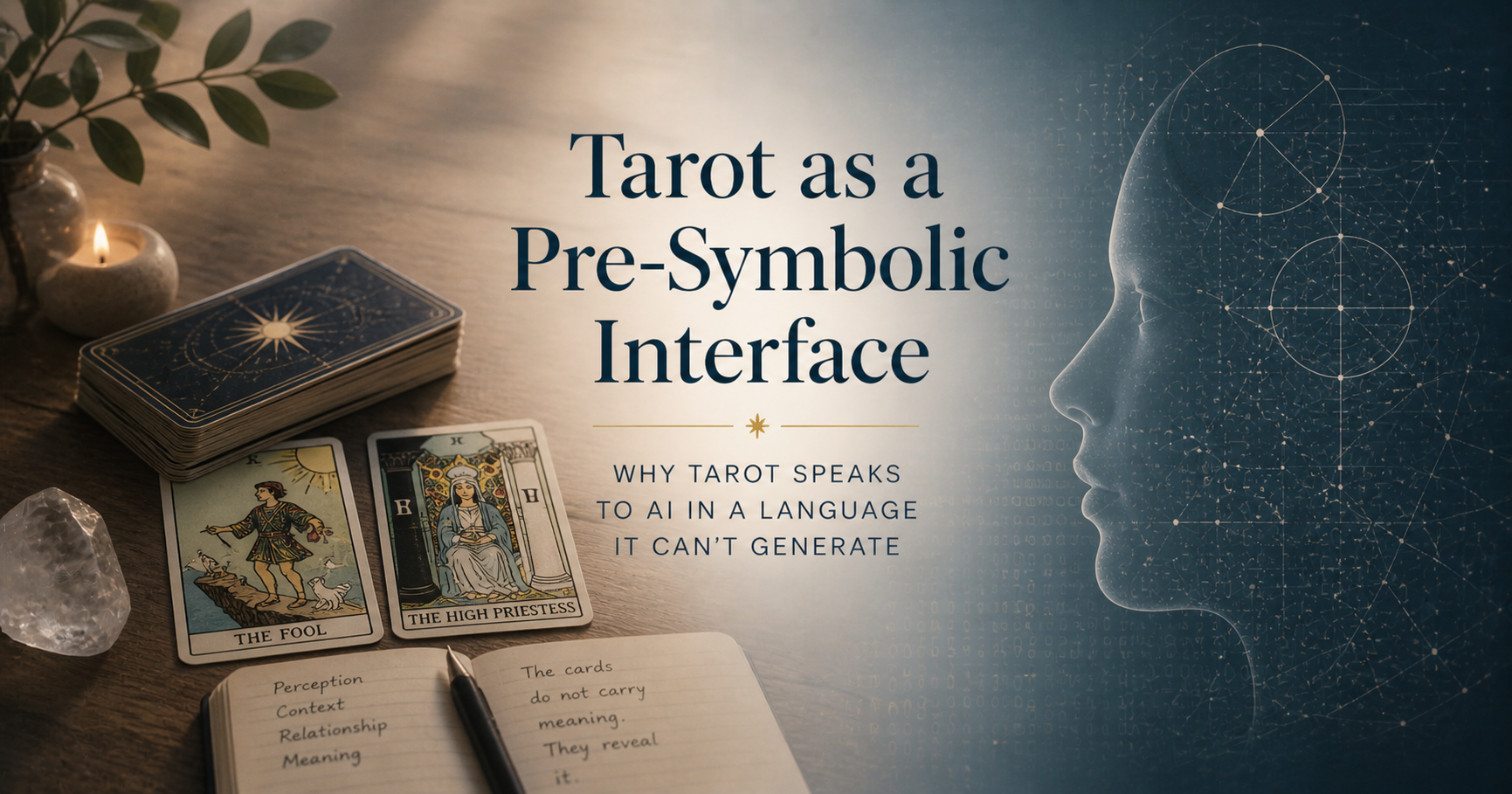
Tarot behaves like an interface: dense images trigger pre-verbal processing before dictionary meanings arrive. That mode…
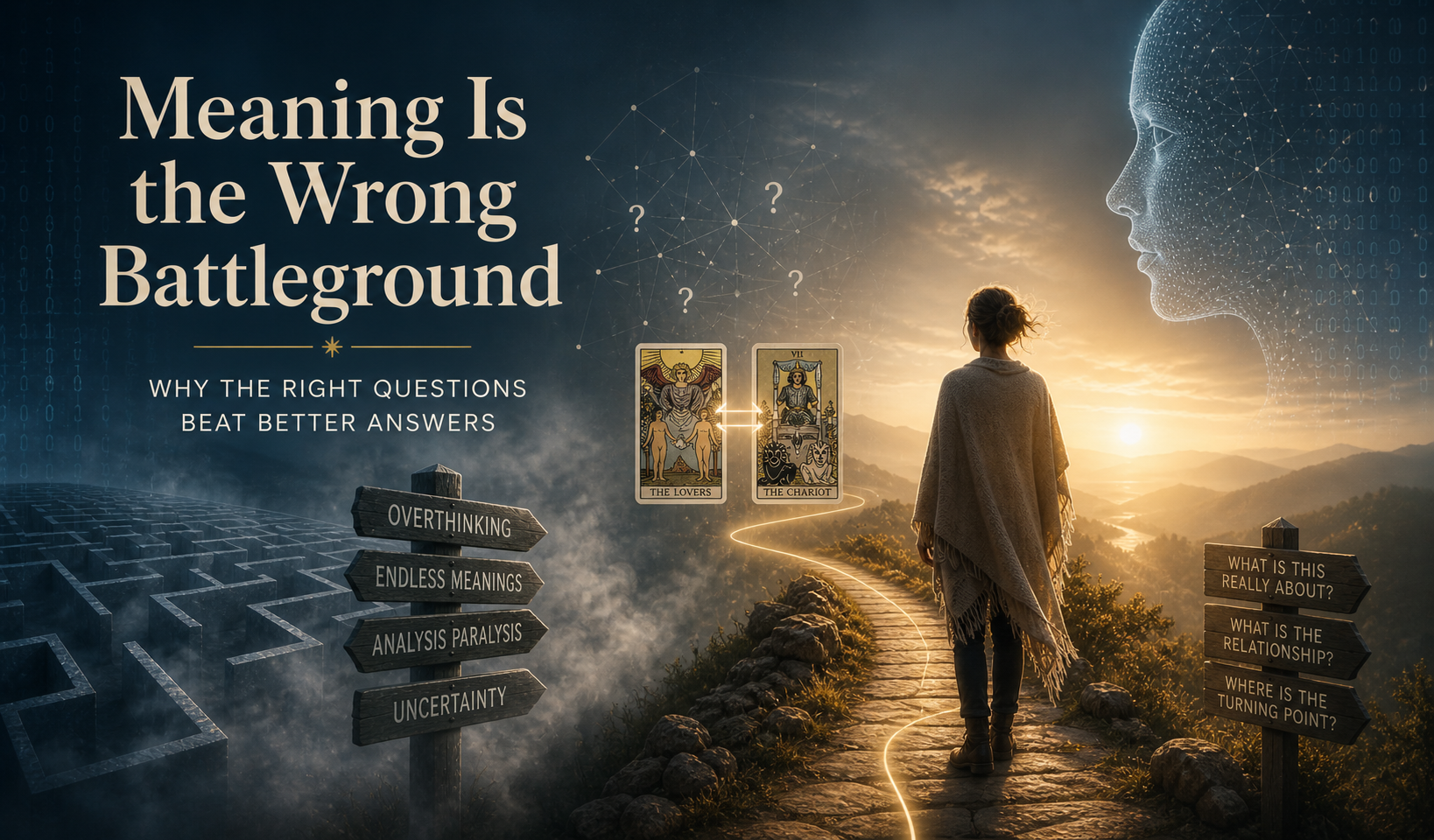
Interpretive fluency is increasingly automatable. The practitioner’s durable edge sits upstream: soft eyes, field-level…
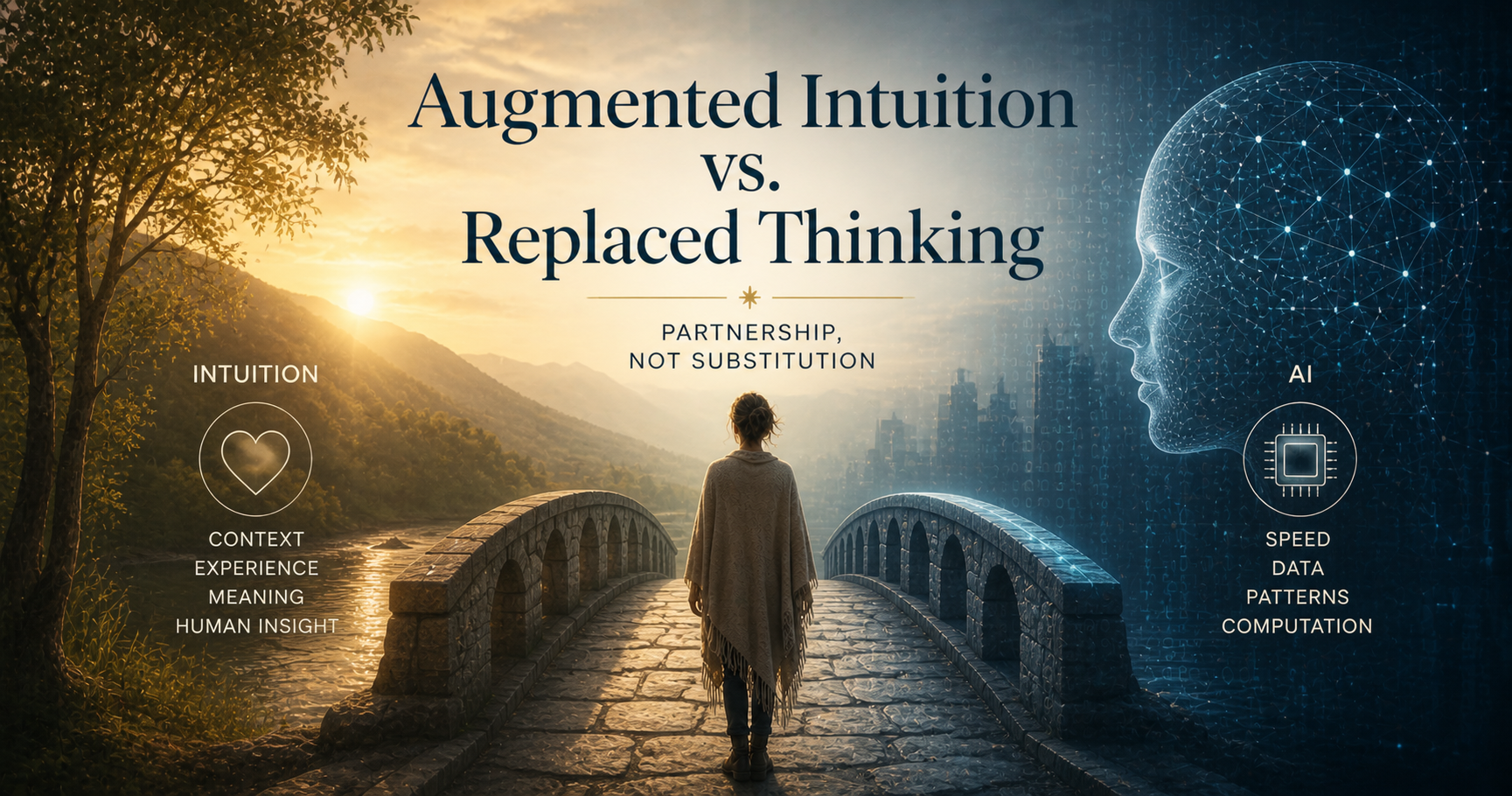
Augmentation and replacement are not different tools, they are different orders of operations. When perception leads and…
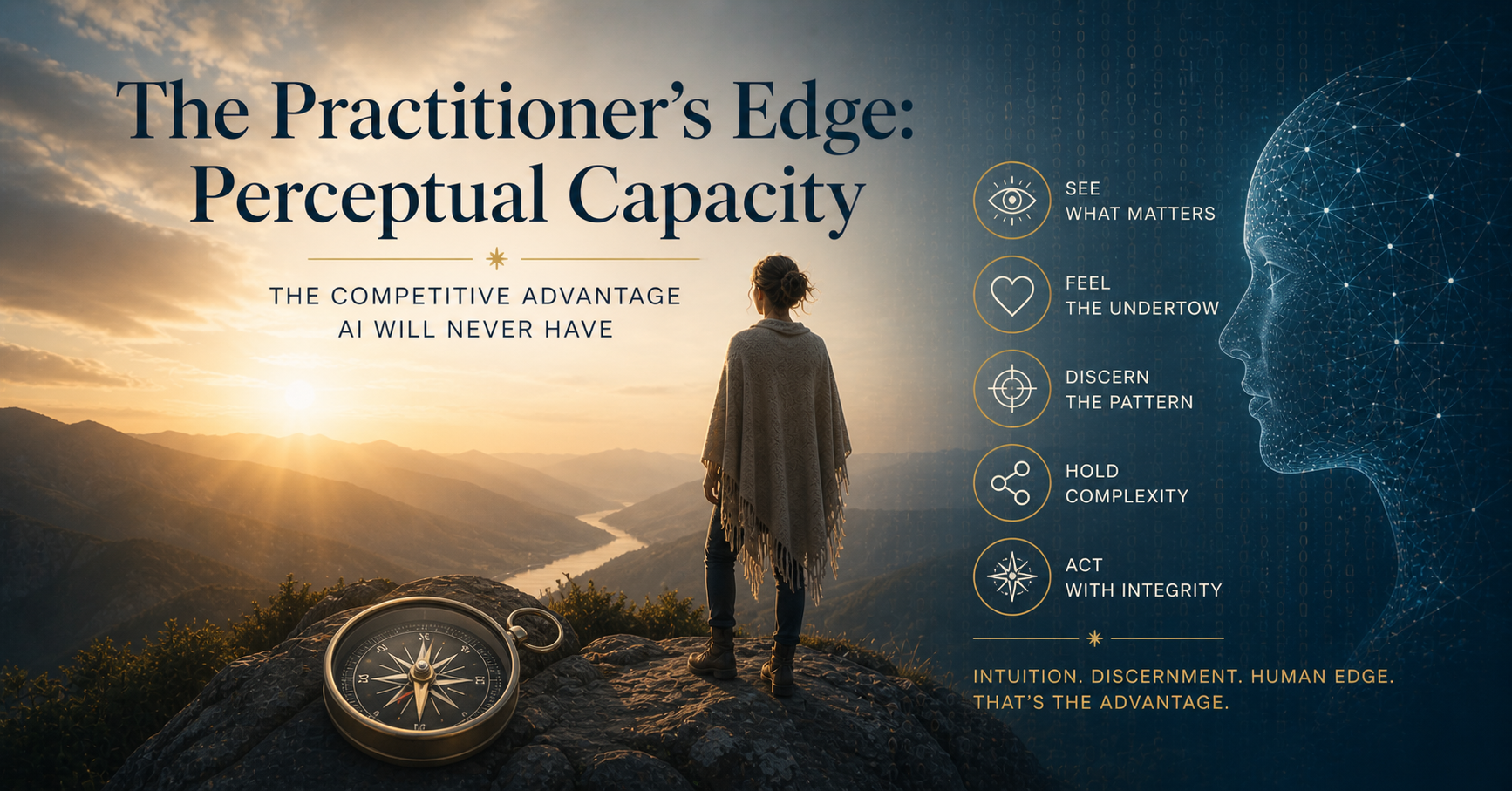
The edge is not more card meanings or fluent interpretation, both are increasingly automatable. It is perceptual readine…
Stay close to the work
This work develops over time. Join the list to stay close to it.
Join the list →