
The Discernment Series
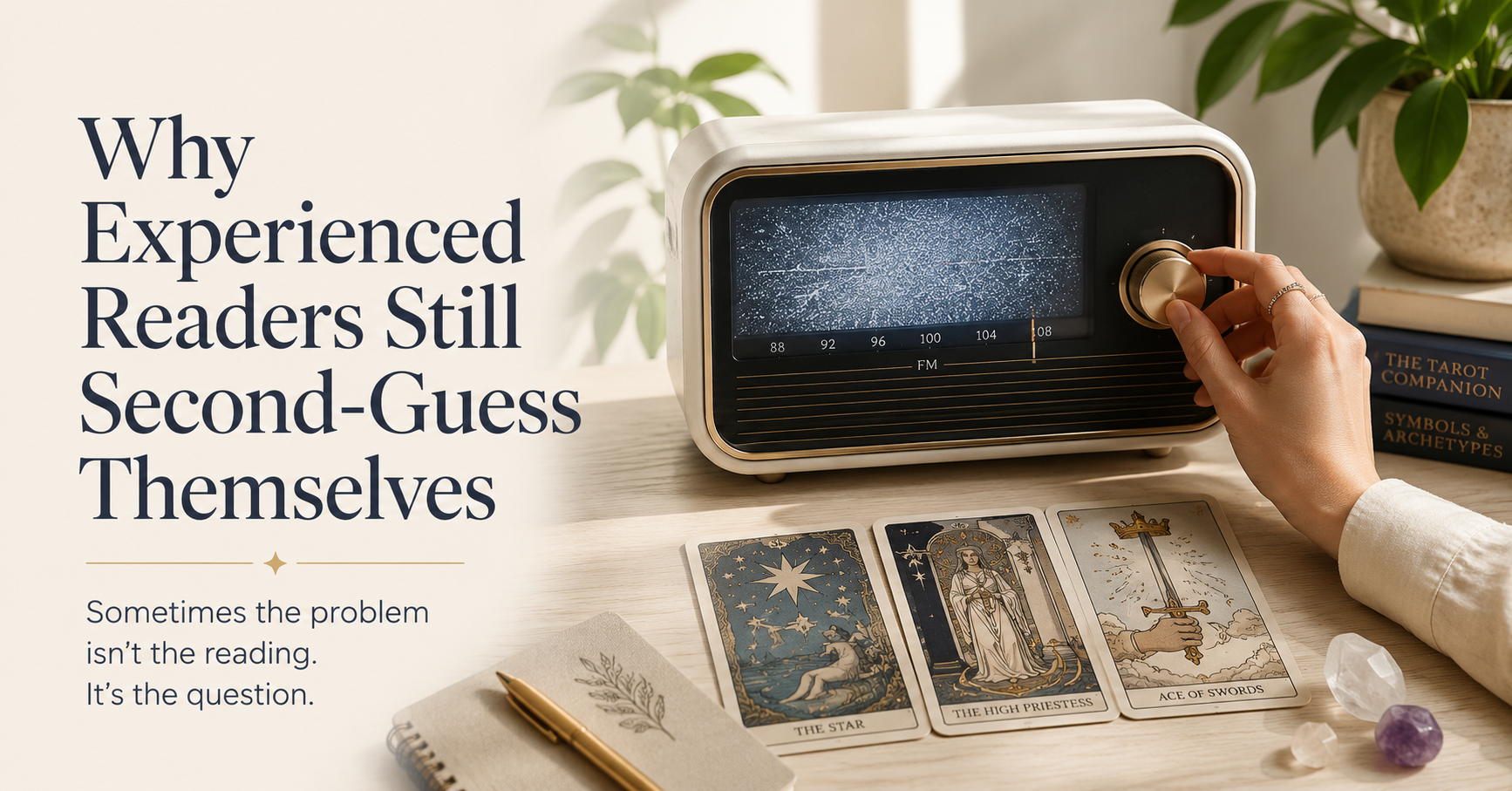
Why Experienced Readers Still Second-Guess Themselves
Static in a tarot reading is not always a skill failure. Often it means the question being read is not the one the seeke…
Methodology articles on contextual reading, spread architecture, precision, timing as conditions, and the shift from card lists to structured interpretive work.
Static in a tarot reading is not always a skill failure. Often it means the question being read is not the one the seeke…
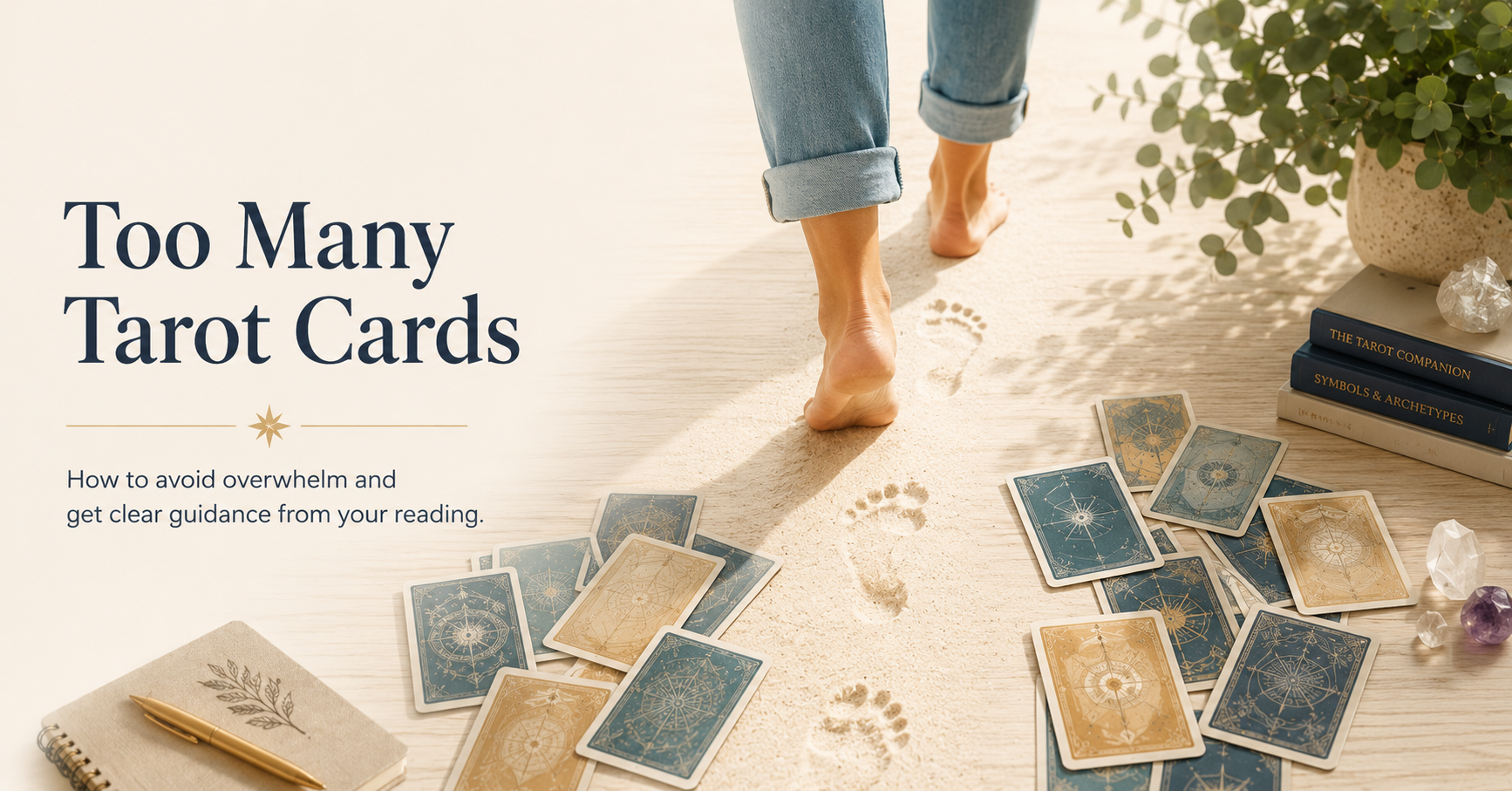
Pulling more tarot cards does not always create more clarity. Often the answer has already arrived, and extra cards simp…
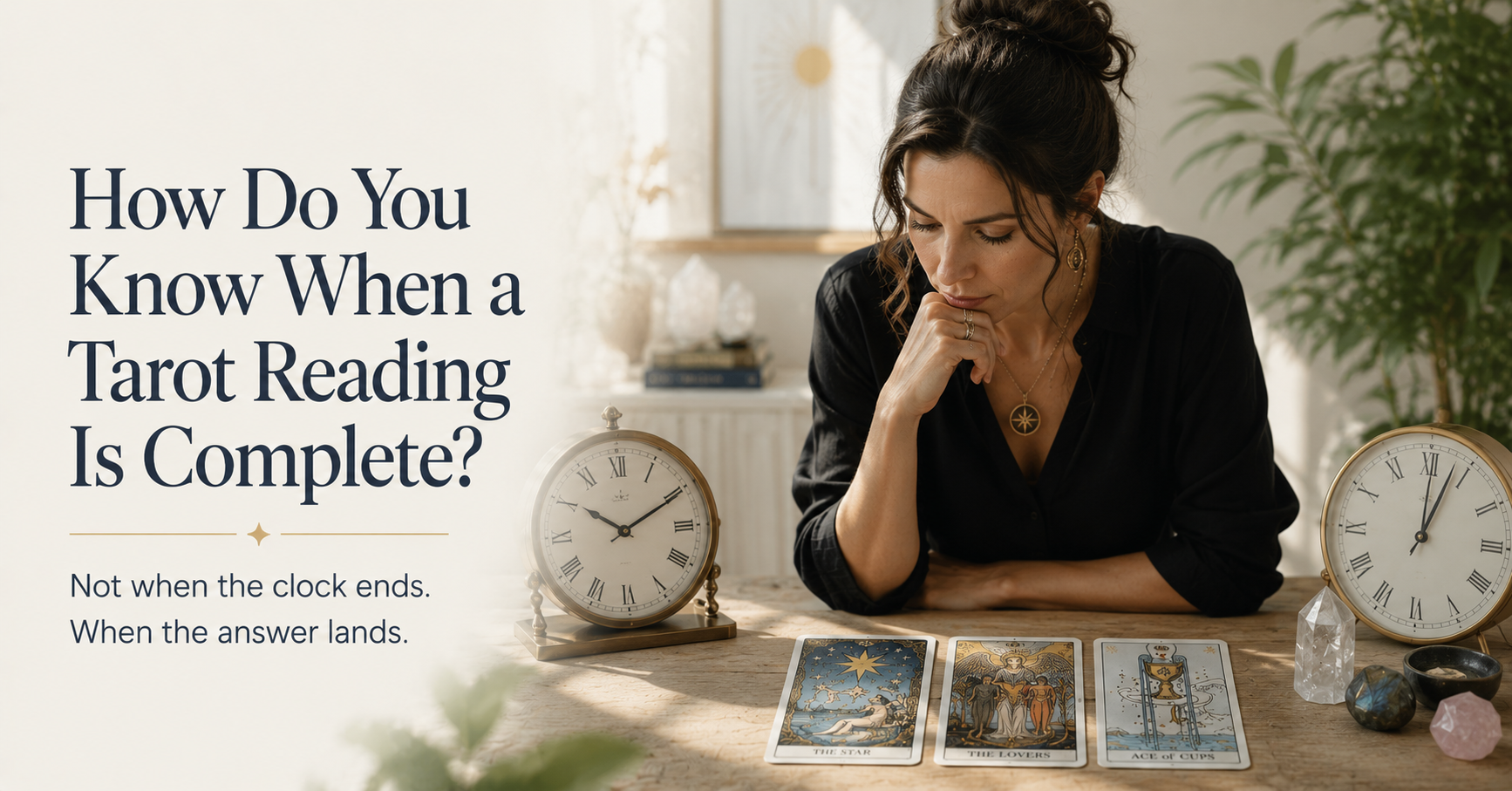
A tarot reading is complete when the answer has landed, not when the clock or card count says you should keep going.
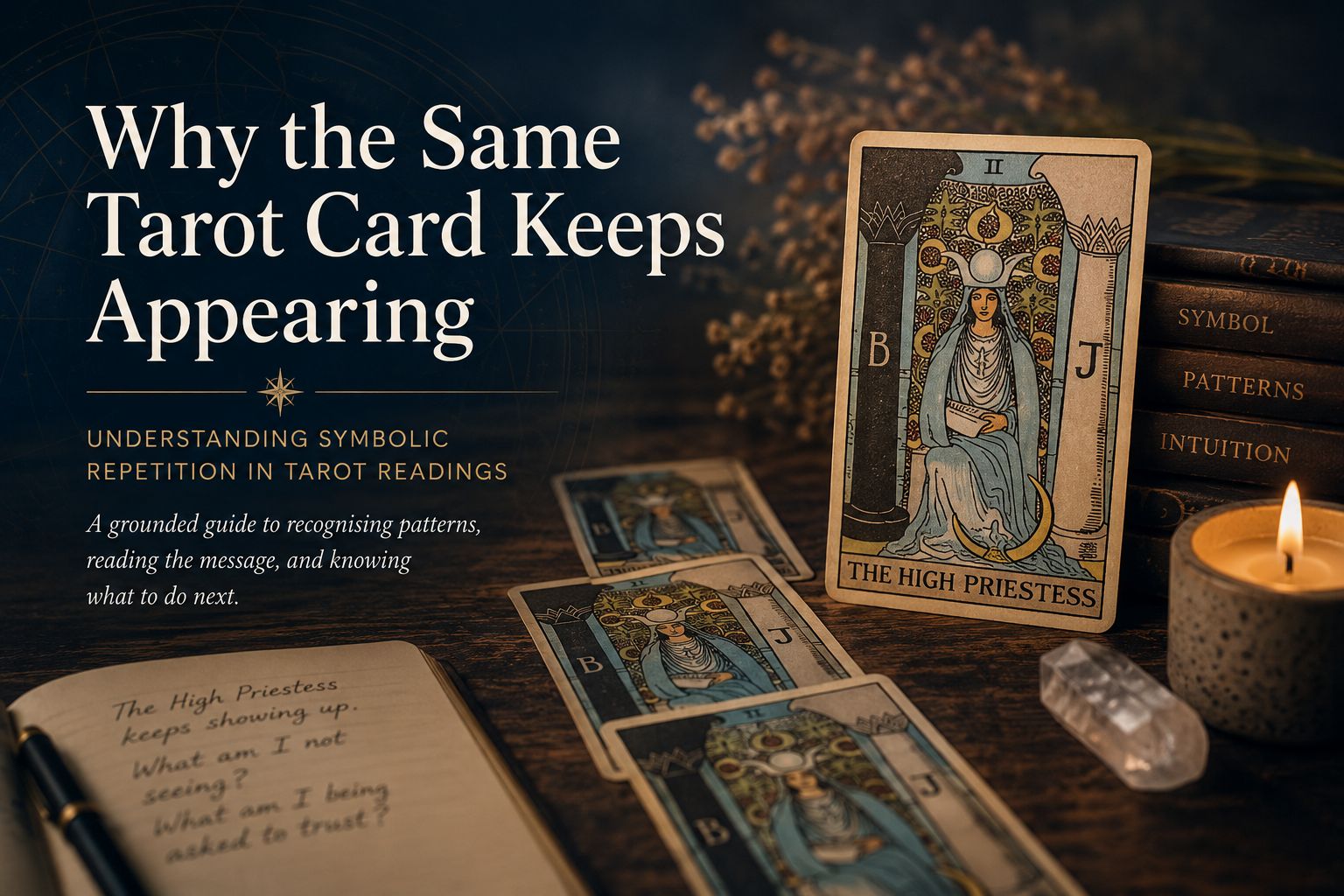
A grounded guide to understanding why the same tarot card keeps appearing, how symbolic repetition works, and how to int…
Large language models operate on encoded language, not on the pre-symbolic layer where intuitive reading begins. This op…
AI outputs feel intuitive because of compression, familiar pattern, and projection, not because the system perceives. Th…
Most intuitive work spends its energy at the translation stage. The reception and recognition stages that come before la…
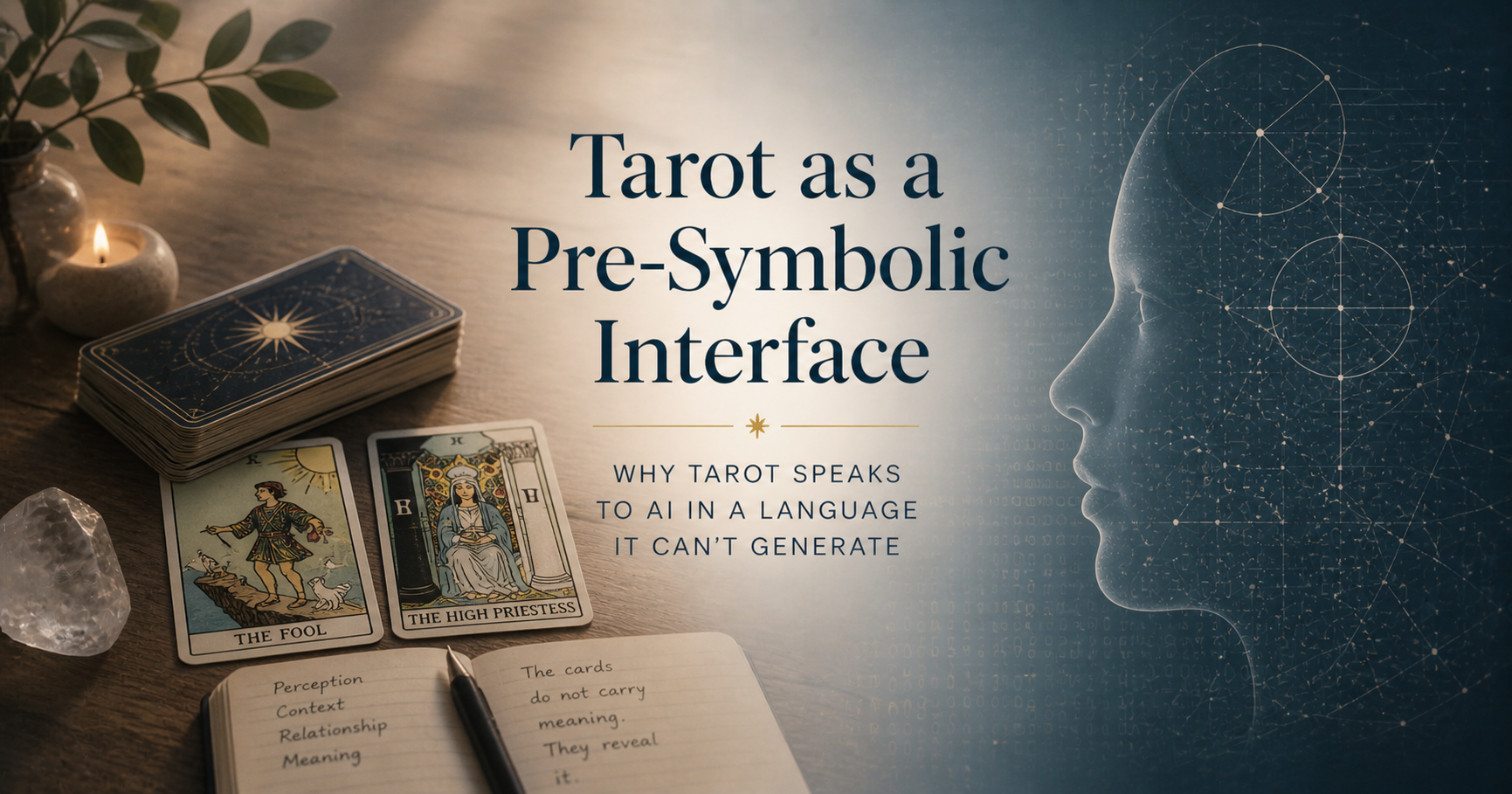
Tarot behaves like an interface: dense images trigger pre-verbal processing before dictionary meanings arrive. That mode…
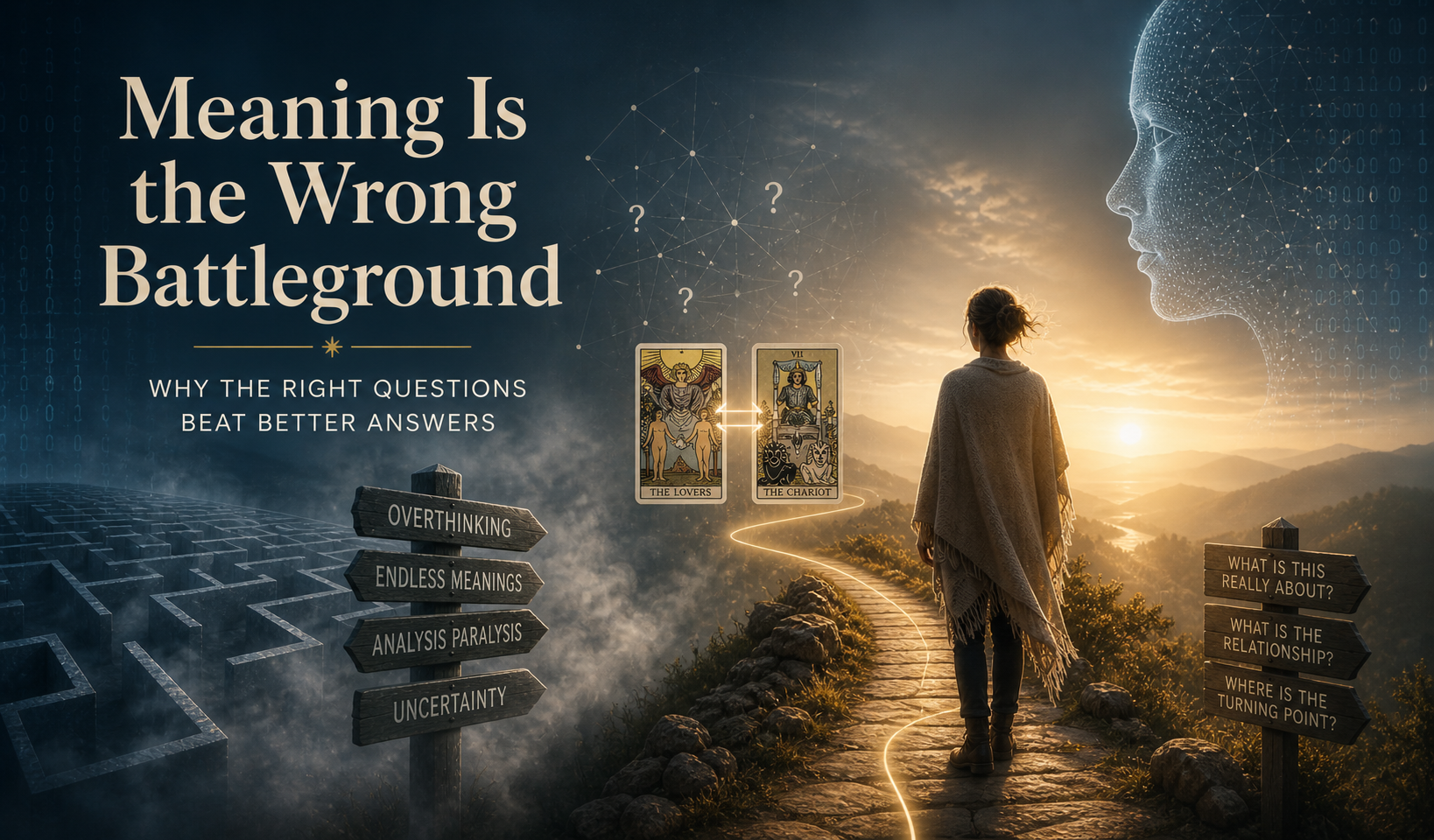
Interpretive fluency is increasingly automatable. The practitioner’s durable edge sits upstream: soft eyes, field-level…
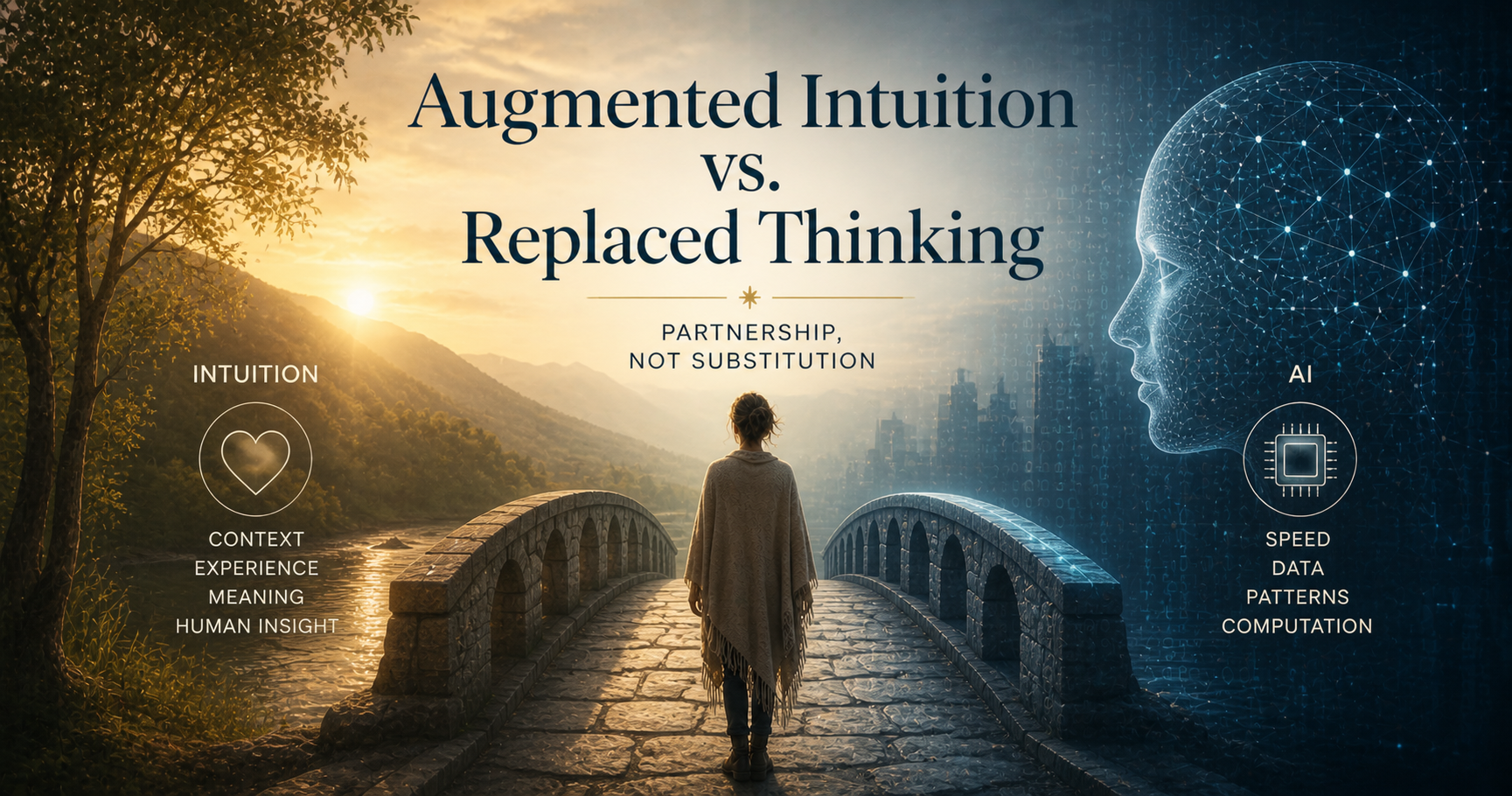
Augmentation and replacement are not different tools, they are different orders of operations. When perception leads and…
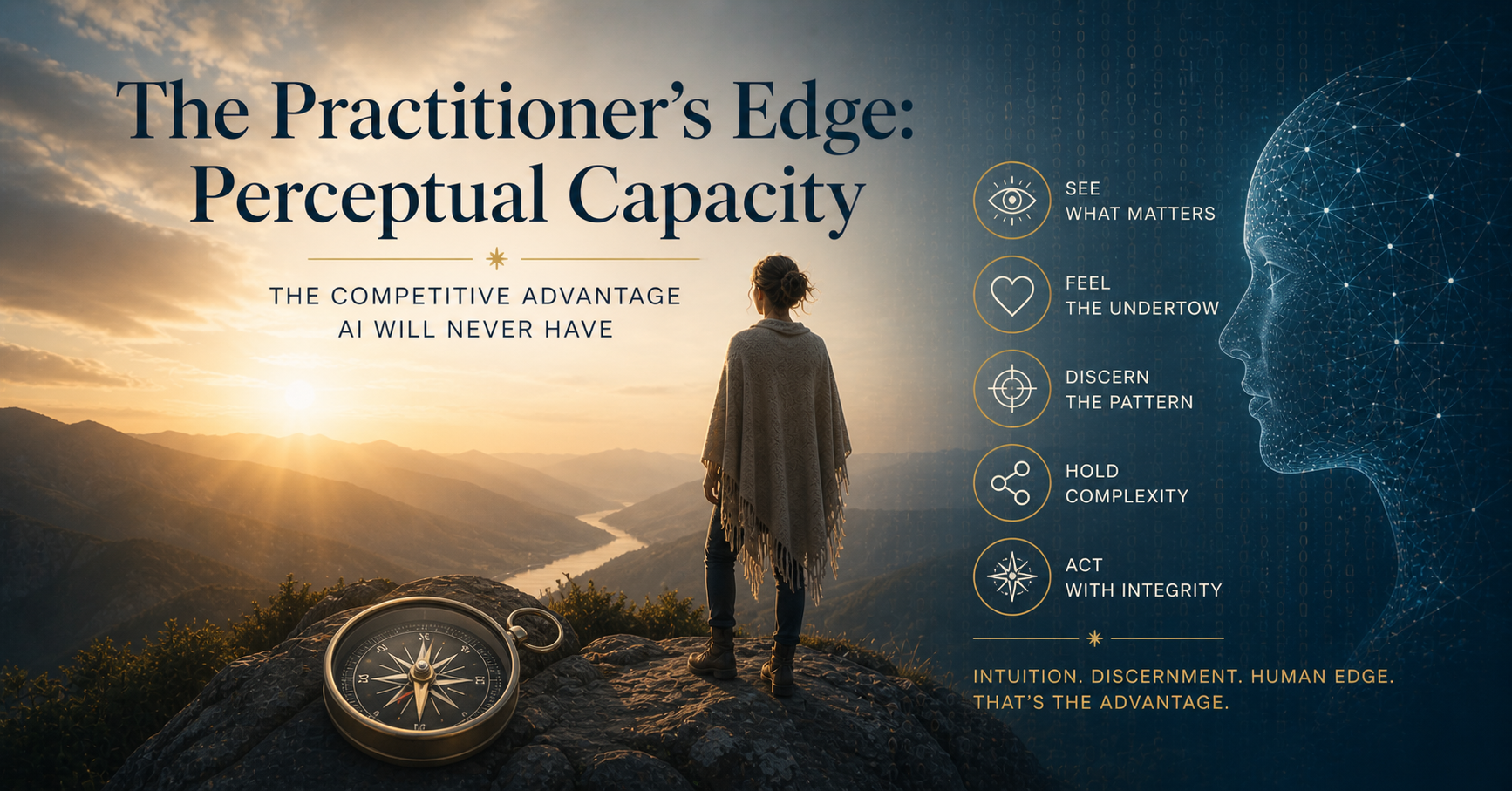
The edge is not more card meanings or fluent interpretation, both are increasingly automatable. It is perceptual readine…
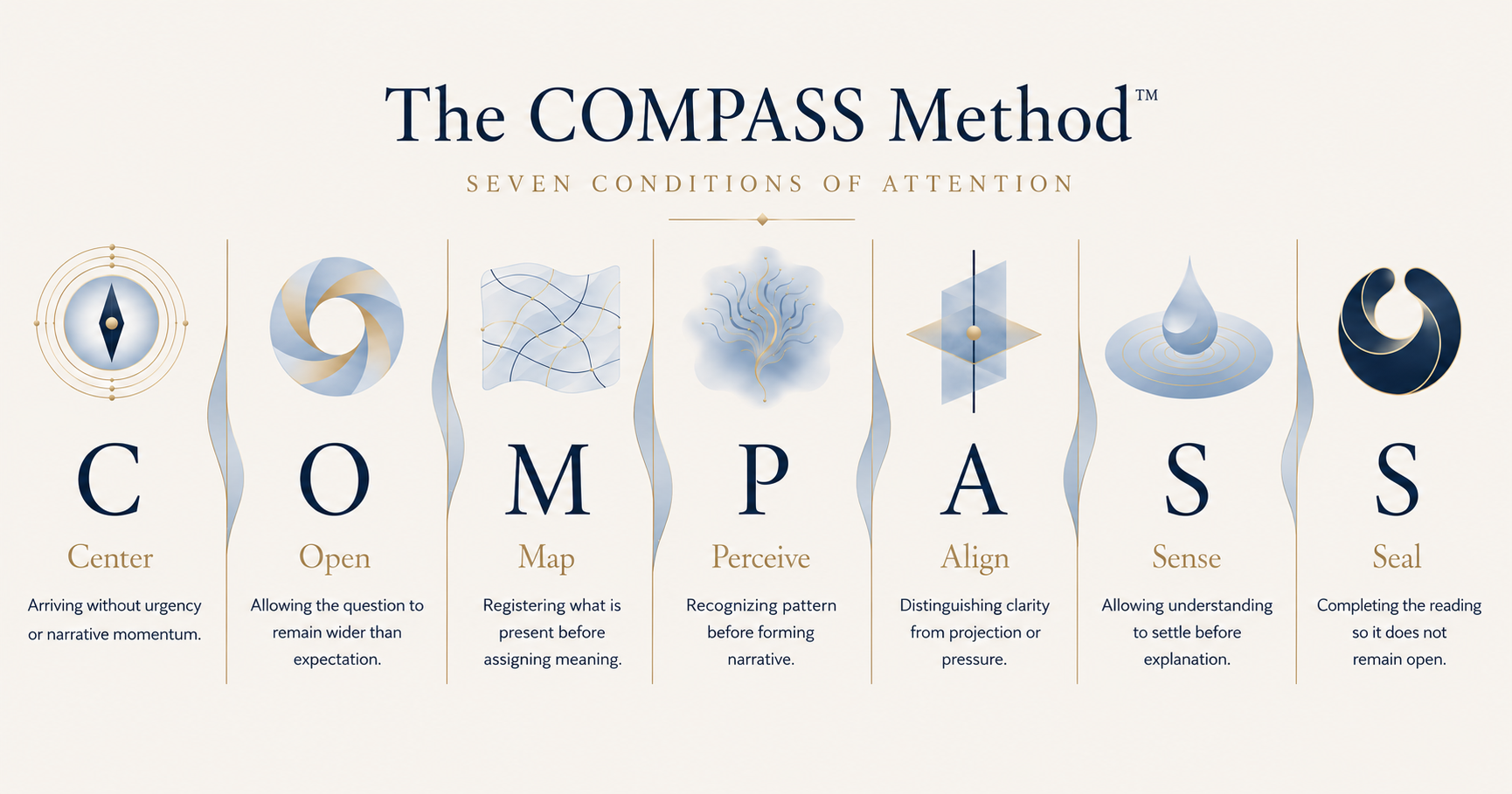
The COMPASS Method™ names seven conditions of attention, Center, Open, Map, Perceive, Align, Sense, and Seal, that help…

Serious tarot readers are moving away from collecting meanings and toward making decisions. This cognitive shift marks t…

The hardest shift in tarot practice: understanding that meaning emerges from context, position, question, and relationsh…

The biggest breakdown in live readings isn't card knowledge, it's flow. The difference between listing explanations and…

The shift from 'when will it happen?' to 'what conditions would enable this?' Advanced readers are abandoning predictive…
Stay close to the work
This work develops over time. Join the list to stay close to it.
Join the list →